Google began rolling out the November 2026 core update on November 10, 2026, at about 10:06 a.m. Pacific Time. It applies globally and to all languages, and Google says the rollout may take up to two weeks. It is the third core update of 2026, after the March and May updates. As of November 12, the rollout is still in progress.
If your rankings or traffic started moving this week, this guide explains what Google has confirmed, how this update compares with earlier Google core updates in 2026, and what you should (and should not) do while it rolls out.
November 2026 Core Update: Key Facts
Detail | What we know |
Update name | November 2026 core update |
Type | Broad core update (ranking) |
Start date | November 10, 2026, 10:06 a.m. PT |
Scope | Global, all languages |
Expected duration | Up to 2 weeks |
Earliest expected finish | Around November 24, 2026 |
Status (Nov 12) | Rolling out |
Core updates in 2026 so far | 3 (March, May, November) |
Ranking updates in 2026 so far | 8 |
Official source |
What Is the Google November 2026 Core Update?
A core update is a broad change to how Google’s ranking systems assess and order search results. It does not target specific sites or pages. Google runs these updates several times a year to keep results current as content on the web changes.
What Google officially said
Google confirmed the update in two places. The Search Status Dashboard entry, posted at 10:07 a.m. PST on November 10, reads:
“Released the November 2026 core update, which applies globally and to all languages. The rollout may take up to 2 weeks to complete.”
Google Search Central’s LinkedIn announcement added:
“This is a regular update designed to better surface relevant, satisfying content for searchers from all types of sites.”
As Search Engine Journal noted, this is the same wording Google used for the March 2026 core update.
What Google did not say
The absence of detail matters as much as the announcement itself. As of November 12:
• No new ranking systems or specific targets were mentioned on the dashboard or in the LinkedIn post.
• There is no Search Central blog post about this update.
• Google’s core updates documentation still carries a revision date of December 10, 2025, so no new guidance has been published.
In practice, this means the standard core update advice still applies. Anyone claiming this update “targets” a specific tactic is speculating, not reporting what Google said.
Volatility started before the announcement
Coalition Technologies reported that rank trackers picked up significant movement earlier in the week, before Google confirmed anything. Some SEOs felt that movement looked like a core update. Treat ranking shifts from the days just before November 10 with the same caution as the rollout itself.
Google Core Update 2026: Full Timeline of Ranking Updates
The November core update is the eighth ranking update listed on Google’s Search Status Dashboard in 2026, and the third broad core update. For comparison, Google announced only four ranking updates in all of 2025.
Update | Start date | Rollout duration | Type |
November 2026 core update | Nov 10, 2026 | In progress (up to 2 weeks expected) | Core |
September 2026 spam update | Sep 24, 2026 | 13 days, 16 hours | Spam |
August 2026 spam update | Aug 18, 2026 | 2 days, 16 hours | Spam |
June 2026 spam update | Jun 24, 2026 | 2 days, 1 hour | Spam |
May 2026 core update | May 21, 2026 | 11 days, 21 hours | Core |
March 2026 core update | Mar 27, 2026 | 12 days, 4 hours | Core |
March 2026 spam update | Mar 24, 2026 | 19 hours, 30 minutes | Spam |
February 2026 Discover update | Feb 5, 2026 | 21 days, 17 hours | Discover |
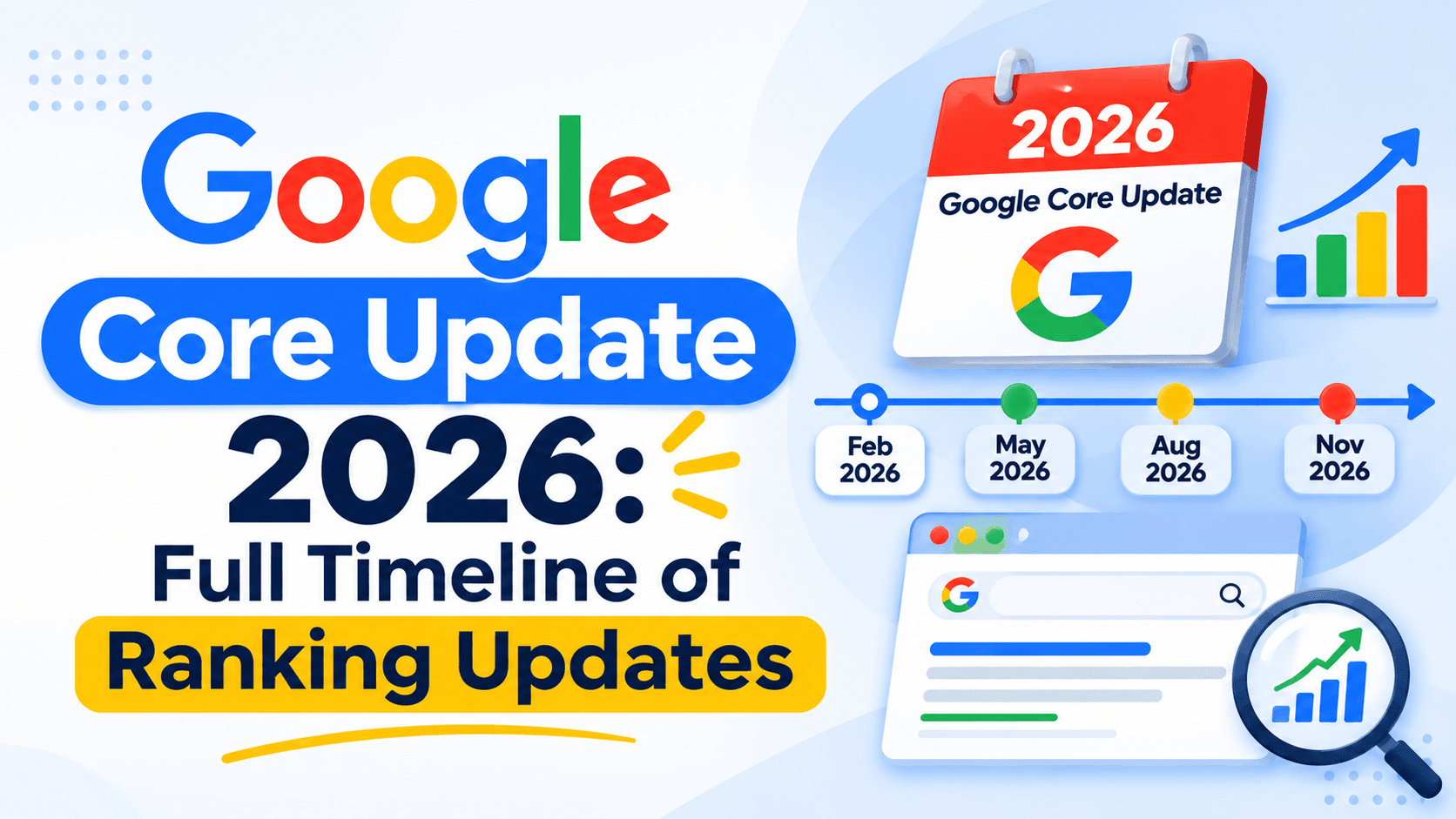
Source: Google Search Status Dashboard, Ranking history. All times are US/Pacific.
May 2026 Google core update: a quick recap
The May 2026 core update ran from May 21 to June 2, just under 12 days. It arrived about six weeks after the March update finished and landed in the same week as Google I/O 2026. Google described it as a regular update, introduced no new ranking systems, and pointed site owners back to its existing guidance on helpful, people-first content.
Coalition Technologies observed volatility spikes around May 23, May 30, and the final day of the rollout. The main lesson from May carries into November: rankings are comparative. A page can lose traffic without any change on your side simply because a competing page improved.
Was There a Google Core Update in September 2026?
No. Google did not release a core update in September 2026. What rolled out was the September 2026 spam update, which ran from September 24 to October 8 (13 days, 16 hours), according to the Search Status Dashboard.
The difference matters when you diagnose a traffic drop:
• A spam update targets content and behavior that violate Google’s spam policies. If you lost visibility in late September or early October, review your site against those policies first.
• A core update reassesses relevance and quality across all sites. A decline here usually means competing pages are now judged more helpful, not that you broke a rule.
So if you are searching for “Google core update September 2026,” the update you are most likely thinking of is the spam update. The November core update arrived about a month after it finished. Coalition Technologies had cautioned in October that a spam update does not predict a core update, though the timing made one unsurprising. That turned out to be the case.
Comparing Google Algorithm Updates: November vs. Earlier 2026 Core Updates
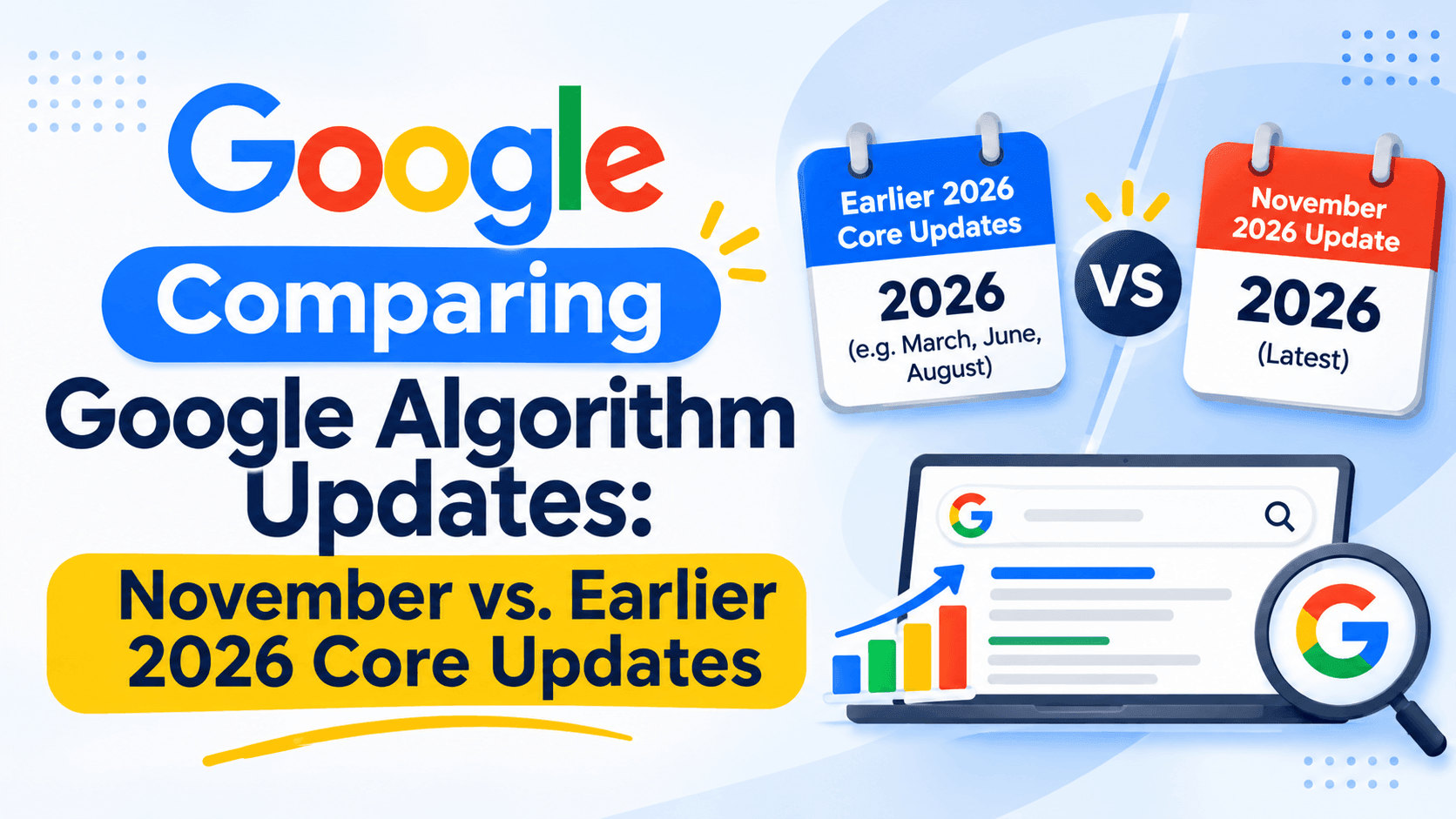
The biggest difference between November and the earlier 2026 core updates is the gap before it. May followed March by about six weeks. November came about 173 days after May started, the longest stretch between core updates this year.
| March 2026 core update | May 2026 core update | November 2026 core update |
Start date | Mar 27 | May 21 | Nov 10 |
Finish date | Apr 8 | Jun 2 | Not finished yet |
Duration | 12 days, 4 hours | 11 days, 21 hours | Up to 2 weeks expected |
Gap since previous core update finished | Dec 2025 update ended late Dec | About 6 weeks | About 5 months |
Google’s description | Regular update to surface relevant, satisfying content | Regular update; no new ranking systems | Same wording as March |
Released alongside | March 2026 spam update (Mar 24) | Google I/O 2026 week | Gemini 4 Carbon in AI Mode (same day) |
Is this update arriving late?
By historical standards, yes. According to Coalition Technologies’ count of the Status Dashboard, Google released 13 core updates from 2022 through 2025, about 3.3 per year, or one every three to four months. Many SEOs expected Google to speed up its core update cadence in 2026. That has not happened.
How past November core updates played out
Google’s “up to two weeks” estimate is not a guarantee. Previous November core updates ran well past that window:
November core update | Start date | Actual duration |
November 2024 | Nov 11, 2024 | 23 days, 13 hours (finished Dec 5) |
November 2023 | Nov 2, 2023 | 25 days, 21 hours |
November 2021 | Nov 17, 2021 | 13 days |
In 2025, there was no November core update. Google released the December 2025 core update on December 11 instead, and it ran for 18 days and 2 hours.
The 2026 core updates so far have both finished in about 12 days, which suggests Google’s estimates have become more accurate this year. Still, plan for the possibility that this rollout runs into December.
Core updates and AI search
Google made Gemini 4 Carbon available in AI Mode on the same day this core update launched. There is no confirmed connection between the two. But it is a reminder that organic ranking changes and AI search changes now arrive side by side. When you analyze performance over the next few weeks, look at AI Overviews and AI Mode visibility separately from classic blue-link rankings.
Why the Timing Matters: A Core Update Before Black Friday
If Google’s two-week estimate holds, the rollout will finish around November 24. That is two days before US Thanksgiving (November 26), with Black Friday on November 27 and Cyber Monday on November 30. If it runs as long as the 2023 or 2024 November updates, rankings could still be moving through Cyber Monday and into December.
The commercial stakes are high. Affiverse Media, citing Adobe’s 2026 holiday shopping forecast, reports that US online sales from Thanksgiving through Cyber Monday are expected to reach $47.5 billion, up 7.4% from last year. Black Friday alone is forecast at $12.9 billion.
Who should pay closest attention
• E-commerce stores: Core updates can affect category pages, product pages, and gift guides during the highest-revenue weeks of the year.
• Affiliate publishers: Product reviews, comparison pages, and deal pages are the pages to monitor in Search Console.
• Sites that depend on Google Discover or featured snippets: Core updates can shift visibility beyond standard organic results.
• Service businesses: Local and service-page rankings can move too, even if holiday demand matters less to you.
The data problem this timing creates
Google recommends comparing a full week after the rollout ends with a week before it started. For this update, that post-rollout week would likely include Thanksgiving, Black Friday, and Cyber Monday. Retail sites would be comparing holiday traffic against a normal week, which can make an update look better or worse than it really was.
The fix is to separate seasonality from ranking changes. Compare against the same holiday period last year as well as recent weeks, and look at average position and impressions, not just clicks.
How to Check if Your Site Was Affected
The short answer: wait until the rollout is complete, then compare Search Console data from the week after it ends with the week before November 10. Daily swings during the rollout are normal and often reverse.
1. Mark the date now. Add an annotation for November 10, 2026, in GA4 or your reporting dashboard so future reviews don’t misread rollout swings.
2. Set your baseline. Google’s suggested baseline for this update is the week before November 10 (November 3 to November 9).
3. Wait for the official finish. Check the Search Status Dashboard until the entry shows the rollout as complete. Then wait at least one more full week.
4. Compare in Search Console. Go to Performance > Search results, click Date, choose Compare, and set the post-rollout week against your baseline week. Review clicks, impressions, CTR, and average position.
5. Segment the change. Use the Pages and Queries tabs to see whether the change is sitewide or limited to specific sections, page types, or topics. A drop concentrated in one template or topic cluster tells you much more than a sitewide total.
6. Separate holiday demand from rankings. If impressions rose but average position fell, demand grew while rankings slipped. If position held steady but clicks moved, it is likely seasonal demand or SERP layout changes, not the update.
7. Cross-check in GA4. Open Reports > Acquisition > Traffic acquisition and filter to Organic Search to confirm whether ranking changes affected sessions, leads, or revenue.
Coalition Technologies suggests tracking three windows: before November 10, during the rollout, and the weeks after it ends. Sustained shifts across those windows tell you far more than daily spikes in third-party rank trackers.
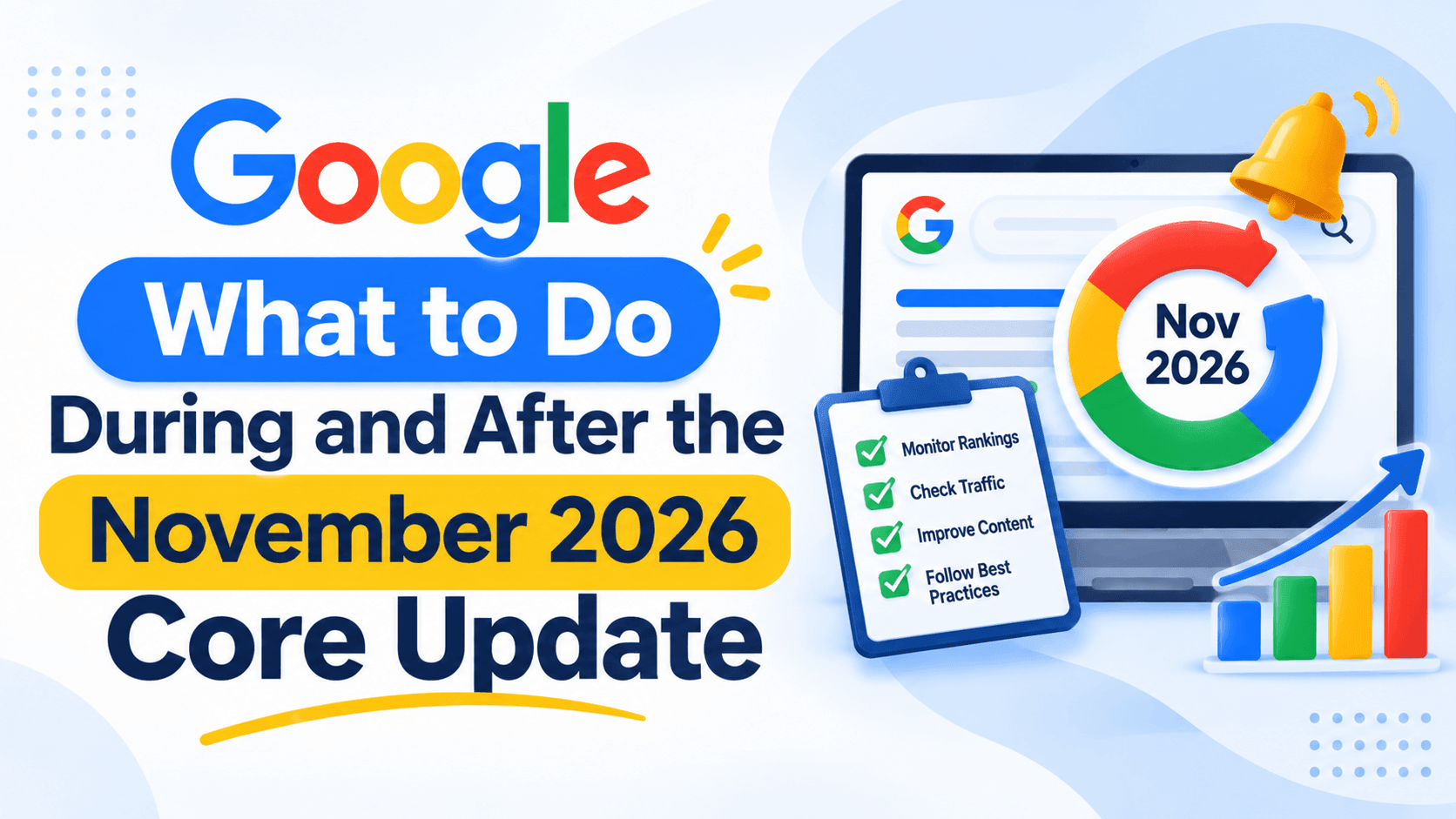
What to Do During and After the November 2026 Core Update
During the rollout, the best move is usually to hold steady. After it finishes, make changes based on patterns in your data, not on single-day movements.
During the rollout (November 10 to completion)
• Avoid sweeping changes to key pages. Rewriting category, product, or service pages mid-rollout makes it impossible to tell what caused any later change.
• Keep fixing genuine technical issues. Broken pages, indexing errors, and server problems should still be fixed right away. Holding steady means no reactive content rewrites, not ignoring real problems.
• Protect revenue with other channels. Paid search, email, and social can cushion organic dips during peak holiday weeks.
• Log what you change. Record any site edits with dates so you can separate your own changes from the update’s effect.
After the rollout, if you lost visibility
Google has not published new guidance for this update, so its existing advice on helpful, reliable, people-first content still applies. Based on that guidance and the patterns Coalition Technologies observed in sites that held steady through the March and May updates, review the affected pages against four areas:
1. Search intent: Does the page answer what the searcher actually wants? Compare it with the pages now ranking above you, since rankings are relative.
2. Experience and expertise: Is the content backed by first-hand experience, named authors, and real evidence, rather than generic summaries?
3. Topical structure: Does your site architecture and internal linking make topic relationships clear?
4. Technical foundation: Can Google crawl, render, and index the affected pages without problems?
Recovery from a core update is rarely instant. Improvements are often reflected gradually or in a later core update, so focus on making the content genuinely better, not on quick fixes.
If your traffic went up
Don’t treat a gain as permanent. Find which pages and queries improved, understand why, and apply what worked to similar pages. Gains during a rollout can also reverse before it ends.
The Bottom Line
The November 2026 core update is a regular, global core update with no new guidance from Google. The two things that make it different are the five-month gap since May and its timing right before the biggest shopping week of the year. Mark the date, hold off on reactive changes, wait for the rollout to finish, and judge the impact with clean before-and-after data. Sites with genuinely helpful content, clear topical structure, and a solid technical foundation have the least to worry about.
We will update this article when Google confirms the rollout is complete.
Share this article