A sudden traffic spike on your website isn’t always a sign of success. Sometimes, it’s a warning of a Distributed Denial of Service (DDoS) attack, an intentional overload that can take your site offline, damage reputation, and hurt conversions. DDoS protection acts as a security shield that filters harmful traffic before it reaches your server, ensuring continuous uptime and smooth performance. Understanding how these attacks work and what protection involves is key to keeping your business secure online.
Understanding DDoS Attacks
A DDoS attack happens when multiple compromised devices flood a website or network with excessive traffic, overwhelming its server resources and making it unavailable to real users. These devices form what’s called a “botnet,” coordinated by attackers to send massive amounts of requests simultaneously.
Common targets include eCommerce stores, financial institutions, and service-based websites, any platform that depends on uptime and trust. Even a short outage can cause revenue loss, drop in SEO rankings, and customer dissatisfaction. Recognizing this risk is the first step toward implementing strong DDoS protection.
What DDoS Protection Involves
DDoS protection combines advanced filtering, monitoring, and automated responses to detect and block malicious traffic before it causes downtime. The goal is to distinguish between real visitors and harmful bots in real time. Below are the main layers of defense involved.
Network-Layer Defences (Volumetric Attacks)
Network-layer defenses focus on high-volume attacks that flood bandwidth with fake traffic, often measured in gigabits per second (Gbps). These defenses use load balancers, rate limiting, and content delivery networks (CDNs) to absorb and reroute massive traffic surges. This prevents your main server from being overwhelmed and keeps your site accessible to genuine users.
Application-Layer Mitigation (HTTP Floods)
Application-layer attacks are more targeted. They mimic normal user behavior, such as page or API requests, but at a scale that crashes web applications. Mitigation tools use behavioral analysis and CAPTCHA challenges to block suspicious requests while allowing legitimate visitors to pass. This layer is crucial for protecting login pages, checkout systems, and dashboards that handle sensitive data.
Traffic Monitoring & Anomaly Detection
Real-time traffic monitoring identifies unusual patterns before they escalate into full-blown attacks. DDoS protection systems rely on AI-driven analytics to detect sudden surges, repeated IP requests, or traffic from untrusted sources. Continuous monitoring ensures that every anomaly is flagged, helping businesses respond instantly and avoid downtime.
Why DDoS Protection Matters for Businesses
A single DDoS attack can disrupt far more than just your website’s availability. It directly affects user experience, SEO performance, and brand reputation. When users can’t access your site or face long load times, they quickly leave, increasing bounce rates and reducing conversions.
Search engines like Google also track uptime and responsiveness. Frequent outages or slow responses can lead to ranking drops, making it harder for potential customers to find your business online. Beyond the technical damage, downtime erodes trust. Customers expect a secure, stable digital experience and if your website fails under pressure, they may turn to competitors.
That’s why robust DDoS protection is no longer optional, it’s a critical business safeguard that ensures reliability, preserves brand credibility, and protects long-term growth.
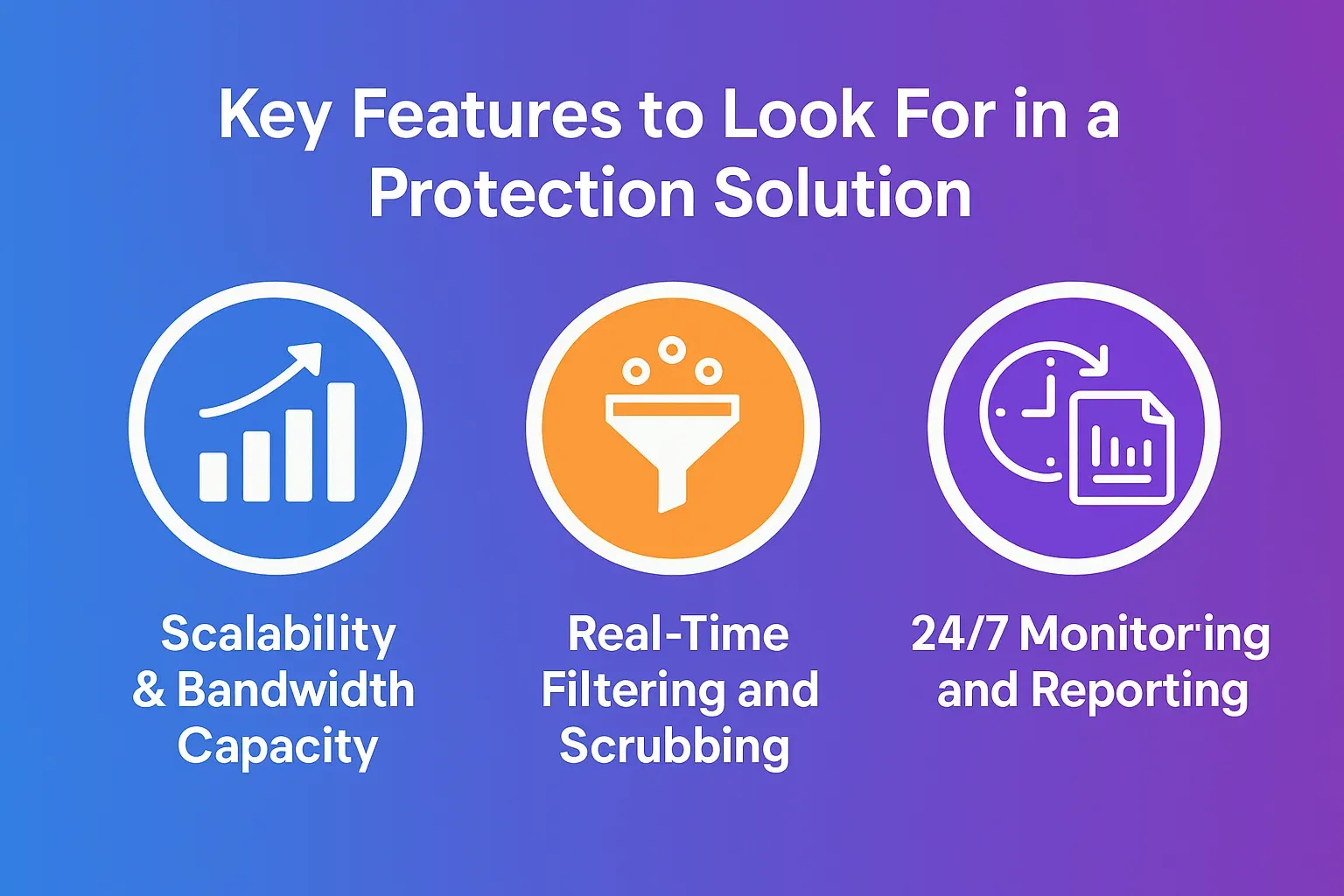
Key Features to Look For in a Protection Solution
When evaluating DDoS protection solutions, not all services are created equal. The best systems combine scalability, intelligence, and proactive defense to ensure consistent uptime. Here are the core features every business should look for:
Scalability & Bandwidth Capacity
A strong DDoS protection service must handle massive traffic spikes without compromising performance. Scalable solutions with global Content Delivery Networks (CDNs) and high bandwidth capacity can absorb attacks before they reach your origin server. This flexibility allows your website to remain online even during high-intensity attacks ensuring uninterrupted user access and stable hosting performance.
Real-Time Filtering and Scrubbing
Traffic scrubbing is the process of separating legitimate user requests from malicious traffic in real time. Advanced protection systems analyze incoming data packets, identify patterns of attack, and filter harmful requests before they overload your network. This capability not only stops attacks quickly but also helps maintain fast and responsive website performance during active threats.
24/7 Monitoring and Reporting
Cyberattacks can happen anytime, making round-the-clock monitoring a must. Reliable DDoS protection platforms provide 24/7 visibility through dashboards, instant alerts, and automated response systems. These tools track performance metrics, log suspicious activity, and generate detailed reports to help businesses understand their vulnerability levels and continuously improve their security posture.
Comparison Table: Protected vs Unprotected Scenarios
The impact of DDoS protection becomes clear when you compare a protected versus an unprotected business. The difference isn’t just technical it affects cost, credibility, and recovery.
Aspect | With DDoS Protection | Without DDoS Protection |
|---|---|---|
Uptime | 99.9% or higher, sustained during attacks | Frequent outages and downtime during attack bursts |
Cost of Downtime | Minimal due to quick response and traffic filtering | Significant revenue loss and operational disruption |
Customer Trust | Maintained through consistent access and reliability | Erosion of trust and possible long-term brand damage |
Recovery Time | Minutes, due to automated mitigation and monitoring | Hours or days, depending on the scale of the attack |
Having the right protection can be the difference between a temporary slowdown and a full-blown business interruption.
Practical Checklist to Choose & Implement DDoS Protection
Implementing DDoS protection requires planning, assessment, and continuous improvement. Here’s a simple checklist to follow:
- Assess your risk exposure: Identify critical web assets, potential vulnerabilities, and business impact if your site goes offline.
- Select a trusted hosting or managed security provider: Partner with experts that offer Managed Hosting or Web Hosting Solutions with built-in DDoS protection layers.
- Evaluate scalability: Choose a service that adapts to growing traffic and evolving threat landscapes.
- Set up testing and simulation plans: Regularly perform stress tests to ensure your defenses react effectively under load.
- Integrate monitoring and alerts: Use dashboards and logs to monitor unusual activity and receive instant attack alerts.
- Update incident response playbooks: Define steps, roles, and escalation paths for faster coordination during an event.
- Review reports and metrics: Continuously optimize your configuration based on data from real-world attack patterns.
This proactive checklist ensures your website stays fast, stable, and trustworthy, even in the face of cyber threats.
Common Mistakes to Avoid with DDoS Protection
Even with strong tools in place, businesses can make costly mistakes that leave them vulnerable. Avoid these common pitfalls:
- Neglecting test drills: Failing to simulate attacks means you’ll never know how your system performs under pressure.
- Relying solely on generic hosting: Standard hosting plans rarely include robust DDoS mitigation layers. Always confirm dedicated protection.
- Not monitoring traffic logs: Overlooking anomaly data can cause delayed responses to early-stage attacks.
- Ignoring scalability: Underestimating bandwidth needs can limit protection effectiveness during large-scale assaults.
- Skipping regular updates: Outdated firewalls and tools weaken your first line of defense.
By addressing these issues early, you can maintain strong resilience and minimize downtime.
Conclusion
DDoS protection plays a crucial role in maintaining uptime, safeguarding user trust, and protecting your brand’s digital reputation. A well-implemented defense system not only ensures smooth website performance but also enhances SEO and user confidence. Get reliable, secure, and high-performing hosting solutions, to keep your business resilient and ready for anything.
Ready to strengthen your website’s defenses? Contact us today to get expert guidance and customized hosting protection for your business.
Share this article