Understanding what is Edge Computing in Web Hosting helps you see why modern websites load faster and respond better to user actions. Today’s online users expect speed, and slow websites lose visitors within seconds. Edge computing solves this problem by moving data closer to the user so information reaches them quickly. When you learn how edge computing works, you understand why many businesses and hosting providers now rely on this advanced approach to improve performance and support global traffic.
Understanding What Edge Computing is
Edge computing places processing power and data closer to users instead of relying on a single distant server. This reduces the time it takes for information to travel across the Internet. When the system processes data near the user, the website loads faster and responds more smoothly. This setup creates a better experience for visitors who expect quick results, especially when they browse from different parts of the world.
How Edge Computing Works
Edge computing uses small local servers, known as edge nodes, placed in different regions. These edge nodes handle requests before sending them to the main server. When a user opens a website, the closest node processes part of the request and delivers the information quickly.
This method reduces travel distance for data. It also lowers the load on the main server because the edge node handles much of the work. This makes the entire system faster, more stable, and better prepared for sudden increases in traffic.
Difference Between Traditional Hosting and Edge Hosting
Traditional hosting stores your website on one main server. Every visitor, no matter where they live, must reach that single server to load the website. This creates delays for users who connect from far distances.
Edge hosting spreads tasks across many small servers placed near users. Instead of traveling across the country or across the world, data comes from the closest edge location. This cuts down load time, reduces strain on the main server, and keeps performance consistent for global visitors.
Traditional hosting focuses on a central point, while edge hosting spreads the workload. This difference creates major improvements in speed and reliability.
Why Edge Computing Matters for Modern Websites
Modern users want speed. They leave a website quickly when pages take too long to load. Edge computing keeps websites fast, even when many people visit at once. It also helps websites stay stable during peak traffic, supports real time apps, and improves mobile browsing.
As more people rely on cloud tools, video streaming, and interactive websites, edge computing becomes essential. It helps businesses meet user expectations and deliver smooth performance to visitors from every location.
How Edge Computing Supports Web Hosting
Edge computing supports web hosting by moving important tasks closer to users. This setup reduces delays, improves page speed, and creates a smoother browsing experience. When the system processes data at locations near the user, it removes long travel distances and cuts the time it takes for a page to load. This approach helps websites stay fast and stable even during busy traffic hours.
Storing Data Closer to Users
Edge hosting stores cached content and important data on small servers located near users. These edge servers deliver images, scripts, and other files without needing to reach the main server every time. This improves website speed because nearby locations respond faster than distant servers.
Local data delivery also helps visitors from different regions experience similar load times. It balances performance and creates equal access for all users.
Reducing Latency and Improving Speed
Latency is the delay that happens when data travels long distances. Edge computing reduces this delay by placing resources close to the user. When distance becomes shorter, the website responds faster. This is one of the main reasons businesses move toward edge hosting when they want stronger performance.
Shorter latency also supports better mobile browsing because mobile devices rely heavily on fast response times. A smooth experience keeps users engaged and prevents drop-offs.
Real Time Processing at the Network Edge
Many modern websites use real time features, such as live updates, instant notifications, and dynamic content. Edge nodes process these actions quickly because they sit close to the user. This helps interactive websites and applications stay responsive.
Real time processing improves everything from chat systems to streaming platforms. It supports fast decision making and accurate results, even when thousands of users connect at once.
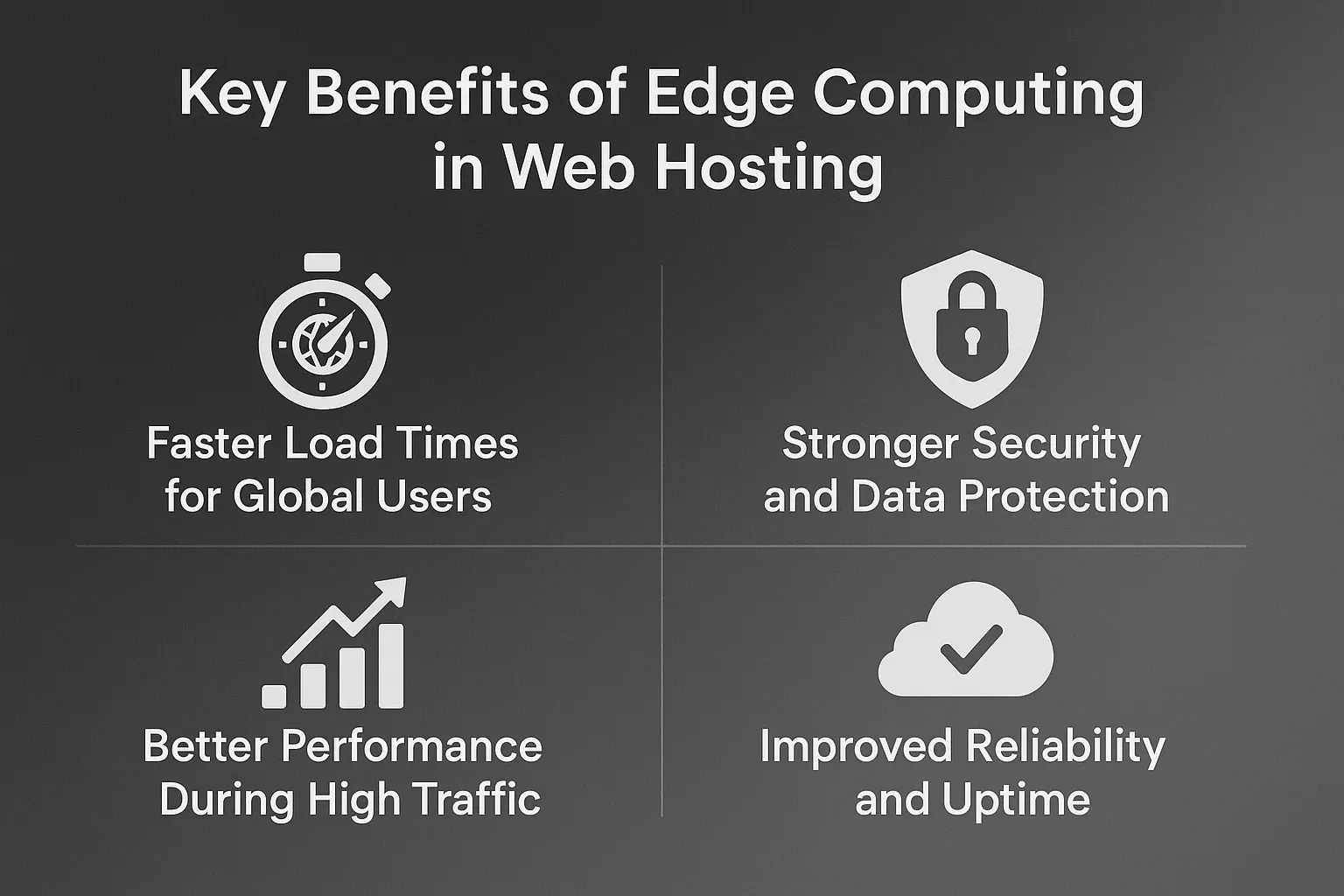
Key Benefits of Edge Computing in Web Hosting
Edge computing delivers several strong advantages that help websites perform better. These benefits improve speed, security, traffic handling, and overall stability. When you use edge hosting as part of your web strategy, you create a setup that supports modern user expectations.
Faster Load Times for Global Users
Edge computing improves load times by sending content from the nearest edge location. Visitors from different regions receive data from servers close to them, not from a single central server. This reduces delays and keeps your website fast everywhere.
Businesses that want stronger visibility often focus on optimizing page speed because a fast website improves user experience and supports better ranking potential.
Stronger Security and Data Protection
Edge hosting reduces risk because data spreads across many locations instead of sitting on one server. This creates extra layers of protection. Many edge nodes include built-in security tools such as firewalls, access control, and threat detection.
When data stays closer to users, it also reduces the number of systems it passes through. This lowers exposure and keeps information safer.
Better Performance During High Traffic
Edge computing helps websites handle busy traffic hours. When many people visit at the same time, edge nodes share the workload. This keeps the main server from becoming overloaded. As a result, the website stays fast even during sudden spikes in traffic.
This is especially helpful for e commerce websites, large platforms, and global brands that experience heavy activity.
Improved Reliability and Uptime
Edge hosting improves reliability because multiple servers deliver the content. If one edge node becomes unavailable, the system switches to another node nearby. This reduces downtime and keeps the website running without interruption.
A reliable setup builds trust with visitors and ensures they can reach your website at all times.
Edge Computing vs CDN: What’s the Difference?
Edge computing and CDNs both bring content closer to users, but they work in different ways. A CDN focuses on delivering static files, while edge computing processes data and handles tasks at the network edge. When you understand these differences, you can choose the best setup for your hosting needs.
How CDNs Deliver Cached Content
A CDN stores cached versions of images, scripts, and other static files at different locations around the world. When a user visits your website, the CDN delivers these files from the server closest to them. This reduces loading time and keeps the main hosting server from handling every request.
CDNs work well for websites that rely heavily on images, media files, and static content.
How Edge Nodes Process Data
Edge nodes go beyond caching. They process data, handle requests, and run actions closer to users. This reduces the need to send every request to the main server. Edge nodes support smarter responses because they can run scripts, manage logic, and deliver dynamic content without delays.
This difference makes edge computing a better choice for websites that need real time updates, interactive features, or global traffic support.
When to Use CDN vs Edge Hosting
Use a CDN when you want faster delivery of static files. It improves load speed and works well for media heavy websites.
Use edge hosting when you need faster processing, real time data handling, or performance support for global traffic. Edge hosting helps websites that rely on dynamic content or complex interactions.
Many businesses use both. A CDN improves static delivery, while edge computing handles real time tasks.
Comparison Table for Clear Understanding
Feature | CDN | Edge Computing |
|---|---|---|
Main function | Delivers cached static files | Processes data near the user |
Best for | Images, scripts, media | Dynamic apps, real time tasks |
Speed improvement | High | Very high |
Processing ability | Low | Strong |
User intent | Content delivery | Logic and data processing |
How to Use Edge Computing in Your Hosting Strategy
A strong hosting strategy uses edge computing to raise speed, improve stability, and support global traffic. When you understand your audience and website needs, you can choose the right setup that delivers fast and reliable performance.
Evaluating Website Speed and User Locations
Start by studying where your users come from and how fast your website loads in each region. If visitors come from many countries, edge computing helps them reach your website quickly. Faster results improve engagement and reduce bounce rates.
Choosing Hosting With Edge Support
Choose hosting that includes edge locations in different regions. This spreads your workload and reduces delays. Edge hosting keeps your website responsive and stable during high traffic hours.
Combining Edge Computing With CDN
Edge computing works even better when paired with a CDN. The CDN handles cached files while edge nodes process dynamic actions. This creates a complete setup that supports every type of user request. Many businesses build this layered approach after learning how page speed affects website experience, which helps them choose the right tools for performance.
Measuring Performance Improvements
After setting up edge hosting, track changes in speed, user engagement, and overall load times. Analytics tools show how the website performs in different regions. These insights help you refine your strategy, add more edge locations, or update files for even faster delivery.
Future of Edge Computing in Web Hosting
Edge computing shapes the future of web hosting as speed and real time performance become more important. As technology grows, more websites and apps will rely on edge systems to deliver quick results.
Growth of Distributed Networks
Distributed networks continue to expand. More hosting providers add new edge locations to bring data closer to users. This growth improves speed and reduces delays across the Internet.
Increasing Demand for Speed
Users expect websites to load almost instantly. Slow pages lose visitors fast. Edge computing helps websites meet these expectations by reducing travel distance for data and improving response times worldwide.
How AI and IoT Will Rely on the Edge
AI tools and IoT devices need fast processing to work correctly. Edge computing supports these systems by handling tasks near the device instead of sending everything to a distant server. This improves accuracy, speed, and reliability in real time environments.
Conclusion
Edge computing changes how websites handle speed, data, and user requests. By moving processing closer to the user, it reduces delays and helps pages load much faster. This approach creates a smoother and more reliable experience for people who visit your website from different parts of the world. When you use edge hosting in your strategy, your website becomes stronger, more stable, and ready for real time tasks.
Share this article