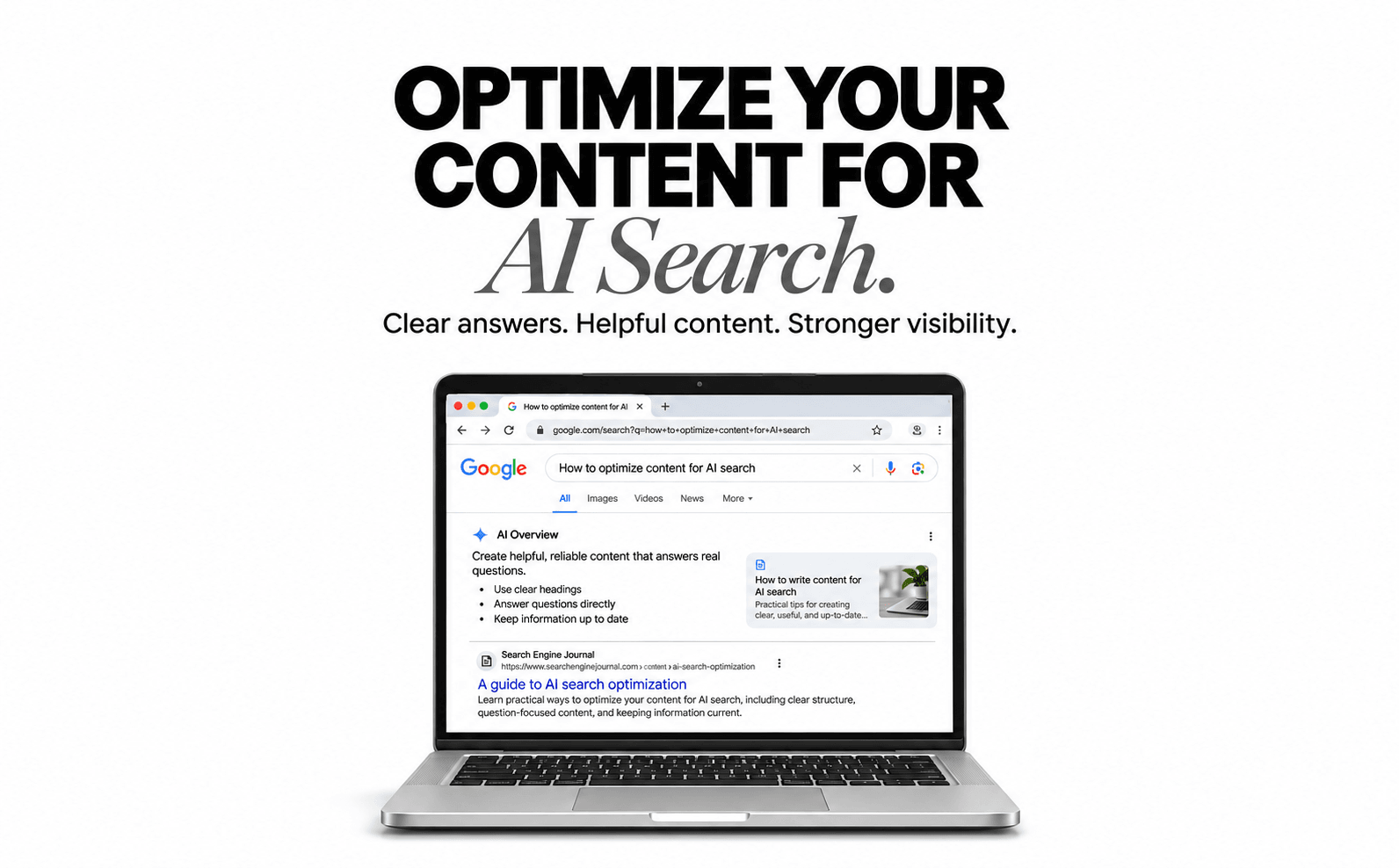
Search engines are changing how people discover information online. Instead of scrolling through multiple websites, users can now ask questions and receive summarized answers from AI-powered platforms such as Google AI Overviews, ChatGPT, and Perplexity.
For businesses, this creates a new challenge: having a website that ranks in traditional search results is no longer the only consideration. Your content also needs to be useful, understandable, trustworthy, and structured well enough to be considered by AI-powered search experiences.
The good news is that optimizing for AI search does not mean abandoning traditional SEO. It means building on the fundamentals while adapting your content to how modern search systems discover information and generate answers.
In this guide, you'll learn how AI search works, how it differs from traditional SEO, and what practical steps you can take to make your content more discoverable across AI-driven platforms.
1. What Is AI Search and How Does It Work?
AI search is a search experience that uses artificial intelligence, natural language processing, and large language models (LLMs) to understand questions and generate relevant answers.
Traditional search engines typically display a list of web pages based on relevance and other ranking signals. AI-powered search platforms take this further by interpreting the user's question, gathering information from relevant sources, and presenting a summarized response.
Some popular AI-powered search experiences include:
- Google AI Overviews: Generates AI-powered summaries within Google Search and provides links to supporting websites.
- ChatGPT Search: Uses web search to provide answers with relevant sources and links.
- Perplexity: Combines conversational answers with cited web sources.
- Voice assistants: Help users find information through spoken questions and conversational responses.
How Does AI Search Retrieve Information?
Although each platform works differently, the general process involves several steps:
- Understanding the query: AI systems interpret the meaning and context behind a user's question rather than relying only on exact keyword matches.
- Finding relevant information: Depending on the platform and query, systems may retrieve information from search indexes, websites, and other available sources.
- Evaluating content: The systems identify information relevant to the question and may consider factors such as usefulness, relevance, and reliability.
- Generating an answer: AI combines relevant information into a conversational response.
- Providing citations: Some platforms display links to the websites used as supporting sources.
For example, someone searching for "What should I consider before hiring a digital marketing agency?" may receive an AI-generated answer covering pricing, experience, services, and reporting.
If your website publishes useful information about these topics, it may have an opportunity to become a supporting source.
However, appearing in an AI-generated response is not guaranteed, even when your content is indexed and accessible.
2. How AI Search Is Changing Traditional SEO
Traditional SEO focuses heavily on improving website visibility in search engine results pages (SERPs). AI search introduces another layer: making information discoverable and useful within generated answers.
This does not mean traditional SEO is becoming irrelevant. Google confirms that its existing SEO fundamentals remain important for AI Overviews and AI Mode.
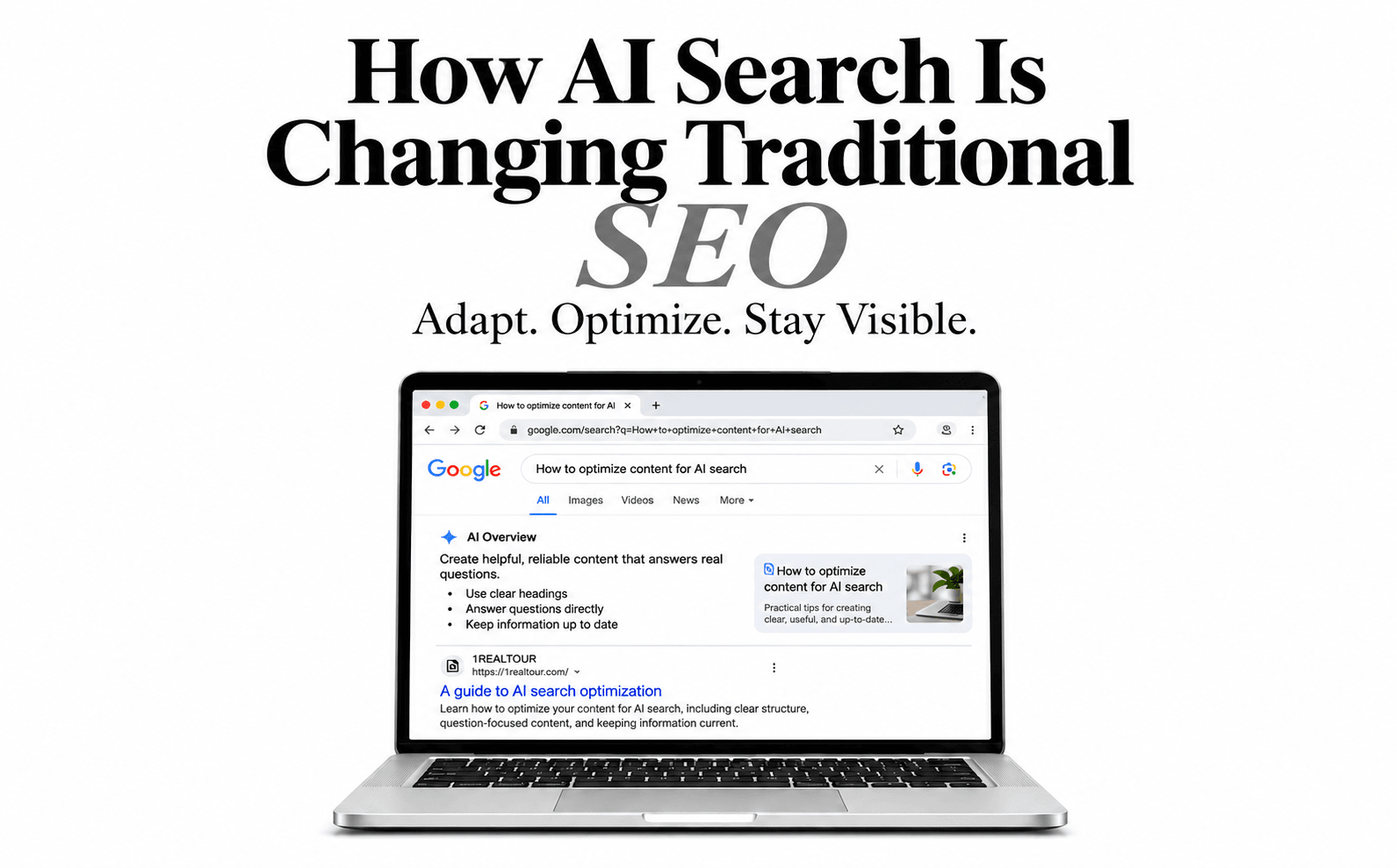
The difference is largely in how users interact with search and consume information.
Traditional SEO | AI Search Optimization |
|---|---|
Targets keywords and search queries | Targets questions, context, and search intent |
Focuses on organic rankings | Also considers AI-generated answers and citations |
Often attracts clicks through search listings | May provide information directly in AI responses |
Uses backlinks and on-page SEO | Also benefits from clear, trustworthy, well-structured content |
Measures rankings and organic traffic | Also tracks AI visibility, mentions, and citations |
For example, a user searching for "SEO agency" might browse several websites. However, someone asking an AI assistant, "Which SEO agency can help a small business improve its online visibility?" expects a more contextual response.
Businesses should therefore optimize for both traditional search visibility and conversational information discovery.
3. Why Businesses Need to Optimize Content for AI Search
People increasingly use AI-powered platforms to research products, compare services, and find solutions to everyday problems.
This shift creates opportunities for businesses that publish relevant, informative content.
Here are some reasons AI search optimization deserves attention.
Improve Brand Visibility
Your business can potentially appear in AI-generated answers even when users do not visit your website immediately.
For example, a digital marketing company might be referenced when someone asks an AI assistant to recommend agencies specializing in search optimization.
Reach Customers During Research
Many customers use conversational searches before making purchasing decisions.
Publishing helpful comparisons, service explanations, pricing guides, and industry insights can help your business become a useful resource during this research process.
Build Brand Authority
Consistently publishing accurate and detailed information around your industry helps establish your website as a valuable source of knowledge.
Support Long-Term Search Visibility
Optimizing for AI search encourages businesses to improve content quality, website structure, technical accessibility, and topical relevance.
These improvements also support traditional SEO efforts.
The goal is not simply to appear in AI answers. It is to make your brand a credible source that people can trust when researching a particular subject.
4. How to Optimize Your Content for AI Search
Effective AI search optimization starts with understanding what your audience wants to know and creating content that answers those questions clearly.
The following strategies can help improve your website's discoverability.
5. Create High-Quality, Helpful, and Authoritative Content
Content quality remains one of the most important foundations of search optimization.
AI systems need useful information to generate relevant answers. If your website contains generic articles that repeat information already available elsewhere, it gives users little reason to trust or revisit your content. Focus on creating content that provides genuine value.
Practical ways to improve content quality include:
- Answer the main search question early in the article.
- Include original insights, examples, and practical recommendations.
- Explain complex topics using simple language.
- Support factual statements with credible sources.
- Update outdated information regularly.
- Address related questions that users may have.
- Avoid unnecessary repetition and keyword stuffing.
For example, instead of publishing a generic article titled "Benefits of SEO," create a more useful guide explaining how SEO helps local businesses generate qualified leads, with examples of relevant strategies and measurable outcomes.
Google recommends creating people-first content that demonstrates originality, expertise, and usefulness rather than producing pages primarily to attract search traffic.
6. Structure Content for AI Search Engines and Answer Engines
Content structure makes it easier for both readers and search systems to understand your information.
A well-organized page helps communicate the relationship between different topics and makes important answers easier to identify.
Consider these formatting practices:
- Use one clear H1 heading describing the page topic.
- Organize major sections with descriptive H2 headings.
- Use H3 headings for supporting topics.
- Keep paragraphs focused on one main idea.
- Use bullet points for lists and important takeaways.
- Add comparison tables when they improve understanding.
- Include descriptive FAQs where they address genuine user questions.
Use Answer-First Content Formatting
One useful approach is to provide a direct answer immediately after a question-based heading, followed by additional context.
For example:
What Is AI Search Optimization?
AI search optimization is the process of improving website content, structure, and technical accessibility to increase its chances of being discovered and referenced by AI-powered search platforms.
You can then explain the process, benefits, examples, and recommended strategies in greater detail.
This format helps readers find answers quickly while providing enough context for deeper understanding.
7. Use Conversational Keywords and Natural Language
People often interact with AI search tools differently from traditional search engines.
Instead of entering short phrases, they ask complete questions or describe their problems in natural language.
For example:
Traditional Keyword | Conversational Search Query |
|---|---|
SEO services | Which SEO services can help my business grow? |
Website optimization | How can I improve my website's search visibility? |
Local SEO agency | Which local SEO agency should I hire? |
AI search optimization | How do I make my website visible in AI search results? |
To adapt your content:
- Research questions your potential customers frequently ask.
- Include relevant question-based headings.
- Address related search intent naturally.
- Use everyday language rather than forcing exact-match keywords.
- Create supporting content around related topics.
For example, a digital marketing agency could publish separate resources covering AI search optimization costs, implementation strategies, benefits, and common technical challenges.
The objective is to cover the subject comprehensively rather than repeat the same keyword throughout the article.
8. Optimize Content for Voice Search
Voice search allows users to find information by speaking into smartphones, smart speakers, and other connected devices.
Unlike traditional typed searches, voice queries are often longer and more conversational.
Someone might type "best SEO agency California" but ask a voice assistant, "Which SEO agency in San Diego can help improve my website traffic?"
This makes Voice search marketing an important consideration within a broader conversational search strategy.
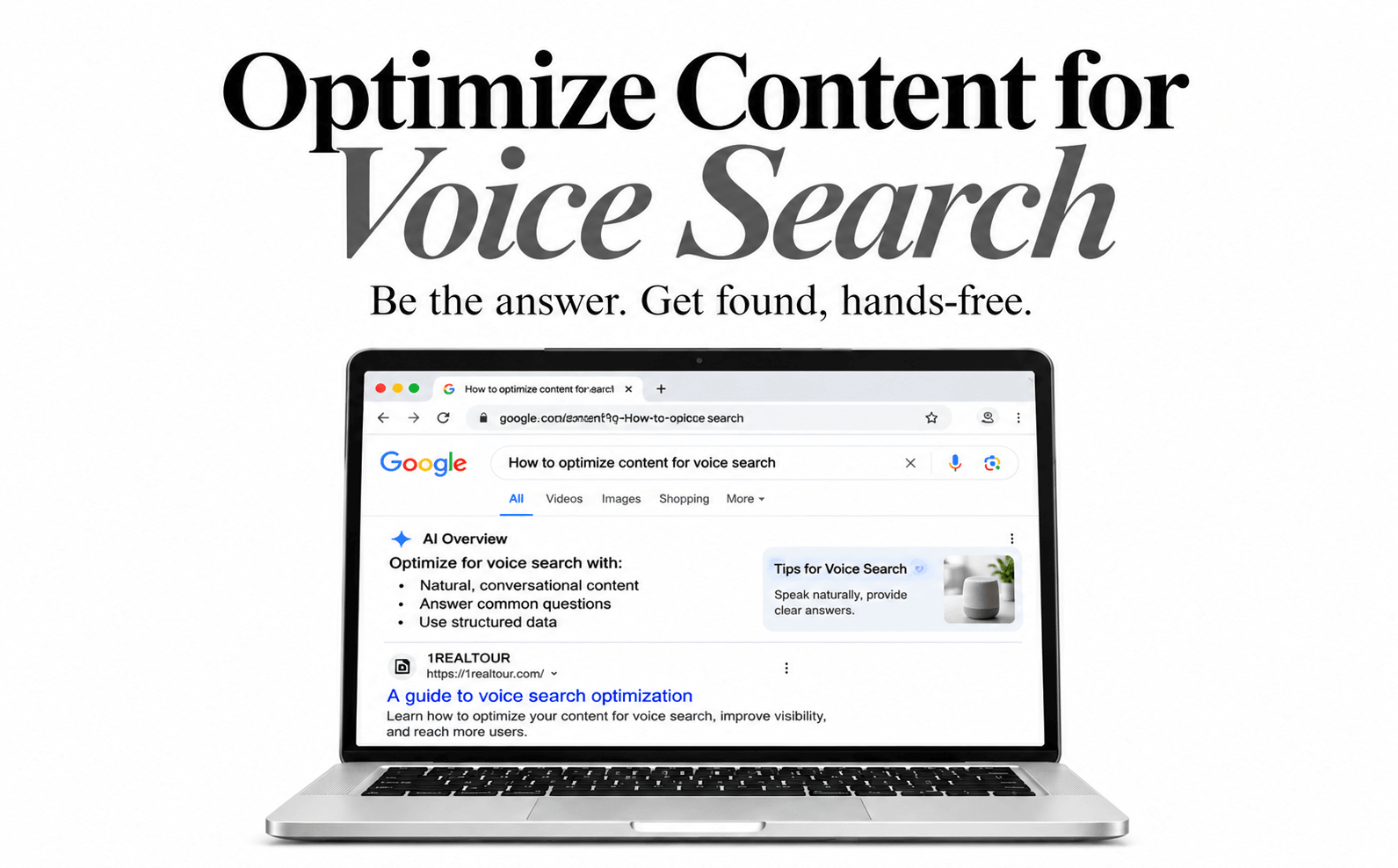
Practical Voice Search Optimization Techniques
- Target question-based keywords such as who, what, where, when, and how.
- Provide short, direct answers to common questions.
- Optimize for local searches when your business serves specific locations.
- Keep business contact details consistent across online platforms.
- Improve mobile usability and website loading speed.
- Use natural language throughout your content.
For example, a home remodeling company could create a dedicated FAQ answering, "How much does a bathroom remodel typically cost?"
The answer should provide useful context, explain the factors affecting pricing, and direct readers toward the relevant service page.
Voice search optimization is not a separate replacement for SEO. It builds on conversational keywords, helpful answers, local relevance, and a strong mobile experience.
9. Implement Structured Data and Schema Markup
Structured data is a standardized format that helps search engines understand the information on your website.
It provides additional context about your pages, services, products, articles, and business details.
Common schema types include:
Schema Type | Purpose |
|---|---|
Article | Describes blog posts and articles |
Organization | Identifies an organization and its details |
LocalBusiness | Provides information about a local business |
Service | Describes services offered by a business |
Product | Provides information about products |
BreadcrumbList | Describes website navigation structure |
For example, an agency publishing an article about AI search optimization can implement Article schema to identify its headline, author, publication date, and other relevant details.
Does Schema Markup Guarantee AI Visibility?
No. Structured data can help search engines interpret your content, but it does not guarantee AI citations, higher rankings, or inclusion in generated answers.
Google also states that there is no special AI-specific schema markup required to appear in AI Overviews or AI Mode. Structured data should accurately reflect the visible content on your pages. Use relevant schema types, validate your implementation, and avoid adding misleading or unsupported information.
10. Build Topical Authority and Relevant Internal Links
Topical authority develops when your website consistently publishes useful information around a specific subject.
Rather than publishing unrelated articles, create a connected content strategy that covers the important aspects of your industry.
For example, a digital marketing website could build an AI search optimization content cluster:
- What Is AI Search Optimization?
- How to Optimize Content for AI Search
- AI Search vs. Traditional SEO
- How Google AI Overviews Work
- How to Improve Website Visibility in ChatGPT
- How to Measure AI Search Performance
- Common Generative Engine Optimization Strategies
Each article should provide unique information while linking to relevant supporting resources.
Why Internal Linking Matters
Internal links help search engines discover pages and understand how different topics relate to each other.
They also guide visitors toward relevant information and service pages.
For example, a blog discussing AI search strategies can naturally link to your AI Search Optimization Services page when explaining how businesses can implement professional AEO and GEO strategies.
Use descriptive anchor text that accurately explains the destination page. Avoid forcing exact-match keywords into every internal link.
11. Strengthen E-E-A-T Signals
E-E-A-T stands for Experience, Expertise, Authoritativeness, and Trustworthiness.
These concepts help evaluate the credibility and quality of online content.
Although E-E-A-T is not a single direct Google ranking factor, its underlying principles are important when creating reliable content.
Here are practical ways to strengthen these signals:
Experience
- Share real-world examples and practical lessons.
- Include original research, case studies, or project insights.
- Demonstrate how recommendations work in real situations.
Expertise
- Publish accurate, detailed information.
- Include relevant author biographies.
- Have specialist content reviewed where appropriate.
Authoritativeness
- Build relevant industry relationships.
- Earn editorial backlinks from credible websites.
- Publish consistently around your core subject areas.
Trustworthiness
- Provide accurate business information.
- Cite reliable external sources.
- Keep content updated.
- Maintain secure website connections.
- Be transparent about your services and claims.
Google recommends making authorship, content creation methods, and the purpose of content clear to readers.
12. How AI Search Optimization Services Help Businesses
Optimizing a website for AI-powered discovery involves more than adding conversational keywords or publishing additional blog posts.
Businesses need a coordinated strategy that combines content development, technical SEO, website structure, entity consistency, and performance measurement.
This is where professional AI search optimization services can help.
An experienced SEO team can identify weaknesses in your existing website and develop a strategy to improve its visibility across traditional search engines and AI-powered platforms.
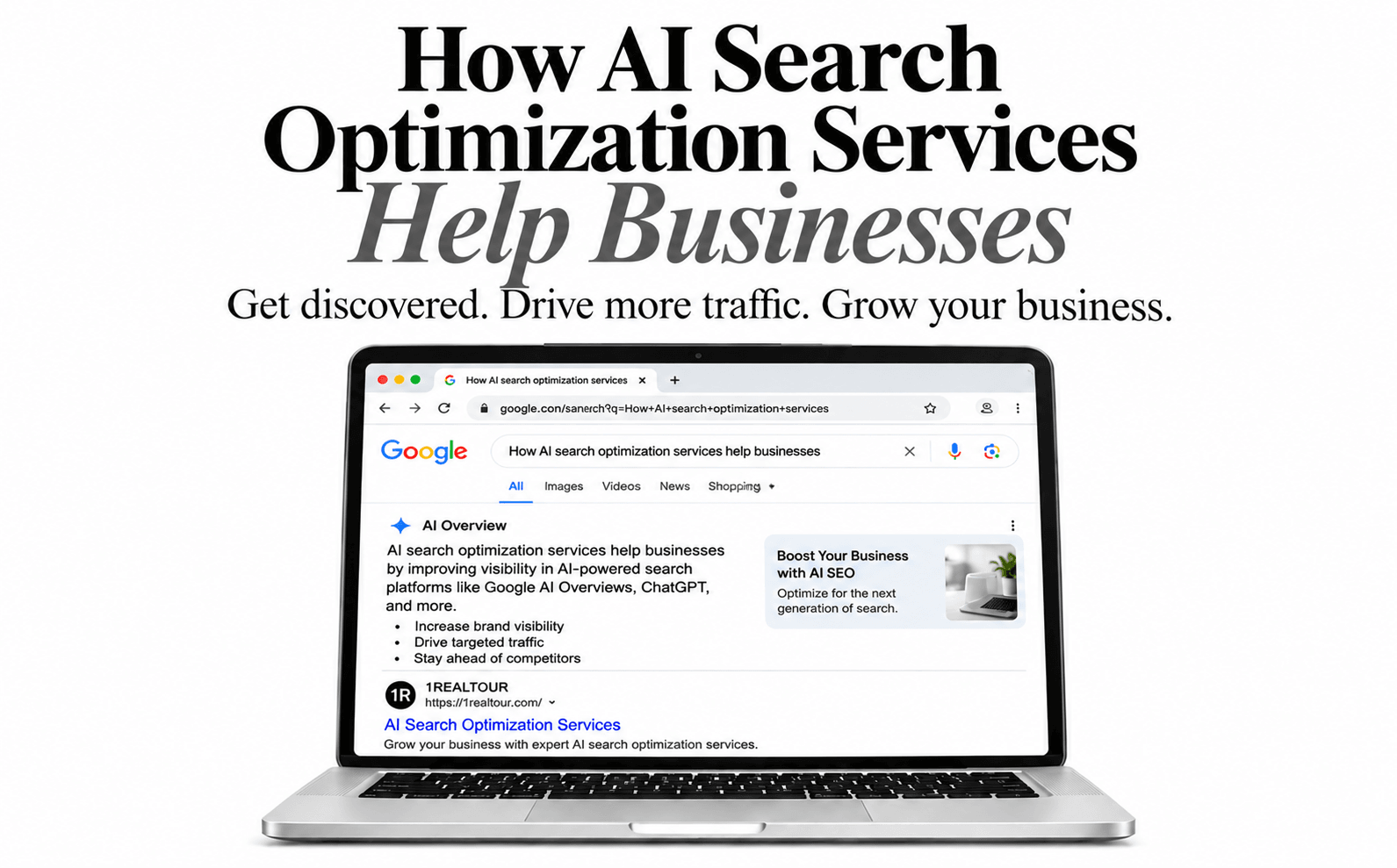
What Do AI Search Optimization Services Include?
1. AI Search and Website Audits
Identify technical issues, content gaps, indexing problems, and opportunities to improve AI search discoverability.
2. Content Optimization
Improve existing pages with direct answers, relevant information, conversational language, and better content organization.
3. Technical SEO Improvements
Review crawlability, indexing, robots.txt settings, website performance, and access for relevant search crawlers.
4. Structured Data Implementation
Add appropriate schema markup to help search engines understand your website's content and business information.
5. Entity and Brand Optimization
Strengthen consistency across your website and relevant third-party platforms so your brand, services, and expertise are clearly represented.
6. Performance Tracking
Monitor organic performance, AI search visibility indicators, brand mentions, citations, and referral traffic.
For businesses that lack the time or technical resources to manage these activities internally, a specialist agency can provide a structured implementation plan.
For example, 1REALTOUR's AI Search Optimization Services focus on AEO and GEO strategies that help businesses improve their discoverability through content optimization, technical accessibility, structured data, and performance tracking.
Remember that no agency can guarantee a specific AI-generated citation or search position. A reliable service provider should focus on measurable improvements and a sustainable optimization strategy.
13. How to Measure Performance Using AI Search Analytics
Traditional SEO reporting often focuses on organic traffic, keyword rankings, impressions, clicks, and conversions.
AI search introduces additional visibility indicators that businesses should monitor.
This is where AI search analytics becomes valuable.
It helps businesses understand whether their brand is appearing in AI-generated responses, which platforms mention their website, and whether AI-driven discovery contributes to meaningful website activity.
Important AI Search Performance Metrics
Metric | What It Measures |
|---|---|
AI brand mentions | How frequently your brand appears in AI-generated answers |
AI citations | Whether AI platforms reference or link to your website |
Referral traffic | Visitors arriving from AI-powered platforms |
Organic impressions | How often your website appears in traditional search results |
Organic clicks | Visits generated through organic search |
Conversion rate | How effectively visitors complete desired actions |
Share of voice | Your brand's visibility compared with competitors across a defined set of queries |
How to Track AI Search Visibility
Step 1: Monitor Traditional Search Performance
Use Google Search Console to evaluate impressions, clicks, queries, and page performance.
Step 2: Track Website Traffic
Use Google Analytics 4 (GA4) to monitor referral sources, landing pages, engagement, and conversions.
Step 3: Monitor AI Brand Mentions
Test a consistent set of relevant customer questions across platforms such as ChatGPT, Perplexity, and Google AI experiences.
Record whether your business is mentioned, cited, or recommended.
Step 4: Analyze Competitor Visibility
Compare how frequently your brand and competitors appear for the same relevant questions.
Step 5: Review Performance Regularly
Identify which pages generate traffic, which topics attract citations, and where additional content improvements may be needed.
Example of an AI Search Tracking Framework
A digital marketing agency could monitor questions such as:
- Which agency offers AI search optimization services?
- How can businesses improve visibility in ChatGPT?
- What is the difference between AEO and GEO?
- Which strategies help websites appear in Google AI Overviews?
By checking these questions regularly, the agency can identify visibility changes and content opportunities.
One important distinction: AI-generated answers can vary by platform, query, location, and time. Manual checks provide useful directional insights but are not a complete measurement of overall AI visibility.
Google's Search Console and GA4 data should remain part of the reporting process, alongside AI-specific monitoring. Google has also introduced additional website-owner insights and controls for its AI search experiences.
14. Common AI Search Optimization Mistakes to Avoid
As businesses adapt to AI-driven search, some make the mistake of focusing too heavily on visibility tactics instead of improving the quality of their websites.
Avoid these common mistakes:
1. Publishing AI-Generated Content Without Human Review
AI writing tools can help with research and content development, but publishing unverified, repetitive content can reduce quality.
Review all content for accuracy, originality, relevance, and practical value.
2. Keyword Stuffing
Repeating phrases such as "AI search optimization" throughout an article does not automatically improve visibility.
Use keywords naturally and focus on answering the questions behind them.
3. Ignoring Technical SEO
Even excellent content may struggle to appear in search results if search engines cannot crawl, access, or index your pages.
Check robots.txt, indexing settings, internal links, and website accessibility.
4. Writing Content Without Clear Structure
Long paragraphs, vague headings, and poorly organized information make content harder to navigate.
Use descriptive headings, concise explanations, and logical content sections.
5. Neglecting Brand Authority
Publishing articles without building a credible online presence is a limited strategy.
Strengthen your brand through relevant industry mentions, original insights, expert contributions, and consistent business information.
6. Expecting Immediate AI Search Results
AI visibility is not guaranteed, and optimization does not produce instant results.
Focus on sustainable improvements rather than expecting every optimized page to appear in AI-generated answers.
7. Ignoring Performance Measurement
Without tracking results, it becomes difficult to understand whether your optimization efforts are working.
Monitor organic performance, AI citations, brand mentions, referral traffic, and conversions.
15. Future Trends in AI Search Optimization
AI search is continuing to evolve, and businesses should expect changes in how people discover information online.
Several developments are particularly important for marketers and website owners.
More Conversational and Contextual Searches
Users are becoming comfortable asking detailed questions rather than entering short keyword phrases.
Content strategies will need to address complete questions, related topics, and different stages of the customer journey.
Growth of Generative Search Experiences
AI-powered search experiences are becoming more integrated into how people research products, services, and businesses.
Google AI Overviews, AI Mode, ChatGPT Search, and Perplexity demonstrate how search is moving beyond traditional lists of links.
Greater Importance of Brand Recognition
Being recognized as a reliable source within your industry will remain important.
Businesses should develop consistent brand information, publish original research, and build relevant third-party references.
Better AI Search Measurement
Measurement tools and reporting capabilities are evolving to help website owners understand their visibility across AI-powered search experiences.
Marketers will increasingly combine traditional SEO reporting with AI citations, mentions, referral traffic, and conversion data.
Stronger Focus on Original Information
As generic AI-generated content becomes easier to produce, original research, practical experience, expert opinions, and useful case studies can help businesses differentiate themselves.
The long-term opportunity is to create content that provides value beyond what an AI-generated summary can easily reproduce.
Conclusion: Prepare Your Content for the Future of Search
AI search is changing how people discover information, compare businesses, and make purchasing decisions. For businesses, adapting to this shift means looking beyond traditional keyword rankings and creating content that genuinely answers customer questions.
Start with the fundamentals: publish helpful content, organize information clearly, optimize for conversational searches, implement relevant structured data, strengthen E-E-A-T signals, and maintain a technically accessible website.
Just as importantly, measure your performance. Monitor organic traffic, AI citations, brand mentions, referral sources, and conversions to understand where your website is gaining visibility and where improvements are needed.
You do not need to abandon traditional SEO to succeed in AI search. You need a strategy that brings both approaches together.
If your business wants to improve its visibility across AI-powered search platforms, explore 1REALTOUR's AI Search Optimization Services. A well-planned AEO and GEO strategy can help strengthen your online presence and prepare your website for the evolving search landscape. The future of search belongs to businesses that provide useful answers, establish trust, and make their expertise easy to discover.
Share this article