To improve SEO rankings, focus on helpful content, strong on-page optimization, technical SEO, quality links, good user experience, and local search visibility. These areas help search engines understand your website and help visitors find useful information.
SEO is an ongoing process rather than a one-time task. Your website needs relevant content, a clear structure, reliable technical performance, and a strategy that matches what people are searching for. The six methods below provide a practical starting point for improving your website SEO rankings and building stronger organic visibility.
How Do SEO Rankings Work?
Search engines crawl and index websites before determining which pages are most relevant to a particular search. Google considers many signals, including content relevance, technical accessibility, links, page experience, and the relationship between a search query and a webpage.
This is why there is no single action that guarantees higher search rankings. A page needs to provide useful information, satisfy search intent, and give search engines enough context to understand its purpose.
Understanding the major Google ranking factors can help you prioritize the areas that have the greatest impact on your overall SEO strategy.
6 Ways to Improve SEO Rankings
Each of these areas supports a different part of your website's search performance. The strongest SEO strategies bring them together instead of relying on one tactic.
1. Create Helpful, Search-Focused Content
Create content that answers the questions your audience is actually searching for. Before writing, identify the search intent behind your target keyword and make sure the page provides a complete, useful answer.
Avoid adding keywords repeatedly just to improve keyword density. Instead, cover the topic naturally, answer related questions, and provide information that gives readers a reason to stay on the page.
A well-planned SEO content outline can help organize information around the reader's needs while keeping the content focused.
2. Optimize On-Page SEO Elements
On-page SEO helps search engines understand what each page covers. Pay attention to important elements such as:
- Page titles and headings
- URLs
- Primary and related keywords
- Image alt text
- Internal links
- Content structure
Use keywords naturally rather than forcing them into every heading or paragraph. Your content should remain easy to read while clearly communicating its subject.
Internal links can also connect related pages and make it easier for visitors to move through your website.
3. Improve Website Speed and Technical SEO
Technical SEO provides the foundation for your content to be crawled, indexed, and accessed properly. Review important areas such as site architecture, broken links, redirects, indexing, canonical URLs, structured data, and page performance.
Website speed also matters to the user experience. Compress large images, reduce unnecessary scripts, use efficient hosting, and remove resources that slow down important pages.
Technical improvements will not replace good content, but they can remove barriers that prevent valuable pages from performing well.

4. Build High-Quality Internal and External Links
Links help establish relationships between pages and websites. Internal links connect relevant content on your own site, while external backlinks can provide additional authority when they come from relevant and trustworthy websites.
Start by linking related service pages, blog posts, and resources where the connection is genuinely useful. For external link building, focus on earning relevant mentions through useful resources, industry relationships, original information, and quality content.
Avoid buying or creating large numbers of low-quality links simply to manipulate search engine rankings. Link quality and relevance matter more than volume.
5. Optimize for Mobile and User Experience
A website should provide a consistent experience across phones, tablets, and desktops. Make sure navigation is simple, text is readable, buttons are easy to use, and important content does not become difficult to access on smaller screens.
Page layouts should also guide visitors naturally toward the information or action they need. A technically optimized page still needs to be clear and usable once someone arrives from search.
Review important pages on real mobile devices and check menus, forms, images, spacing, and loading performance.
6. Strengthen Local SEO for Your Business
Local SEO is particularly important for businesses serving specific cities or service areas. Make your location and service information clear, consistent, and genuinely useful to local searchers.
Create location-focused pages when they provide unique value rather than producing multiple pages with nearly identical content. Local content should address real customer questions and explain how your services apply to the area.
For businesses targeting San Diego and surrounding communities, a focused San Diego SEO strategy can help connect broader SEO work with local search intent.
How Long Does It Take to Improve SEO Rankings?
There is no fixed timeline for improving search engine rankings. Results depend on factors such as competition, website history, content quality, technical condition, authority, and the amount of SEO work being completed.
Some changes may produce noticeable improvements sooner, especially when correcting technical or on-page issues. Competitive keywords often require consistent content, optimization, internal linking, and authority building over a longer period.
The best approach is to treat SEO as an ongoing process. Make improvements, measure the results, and adjust your strategy based on what the data shows.

How to Track Your SEO Ranking Improvements
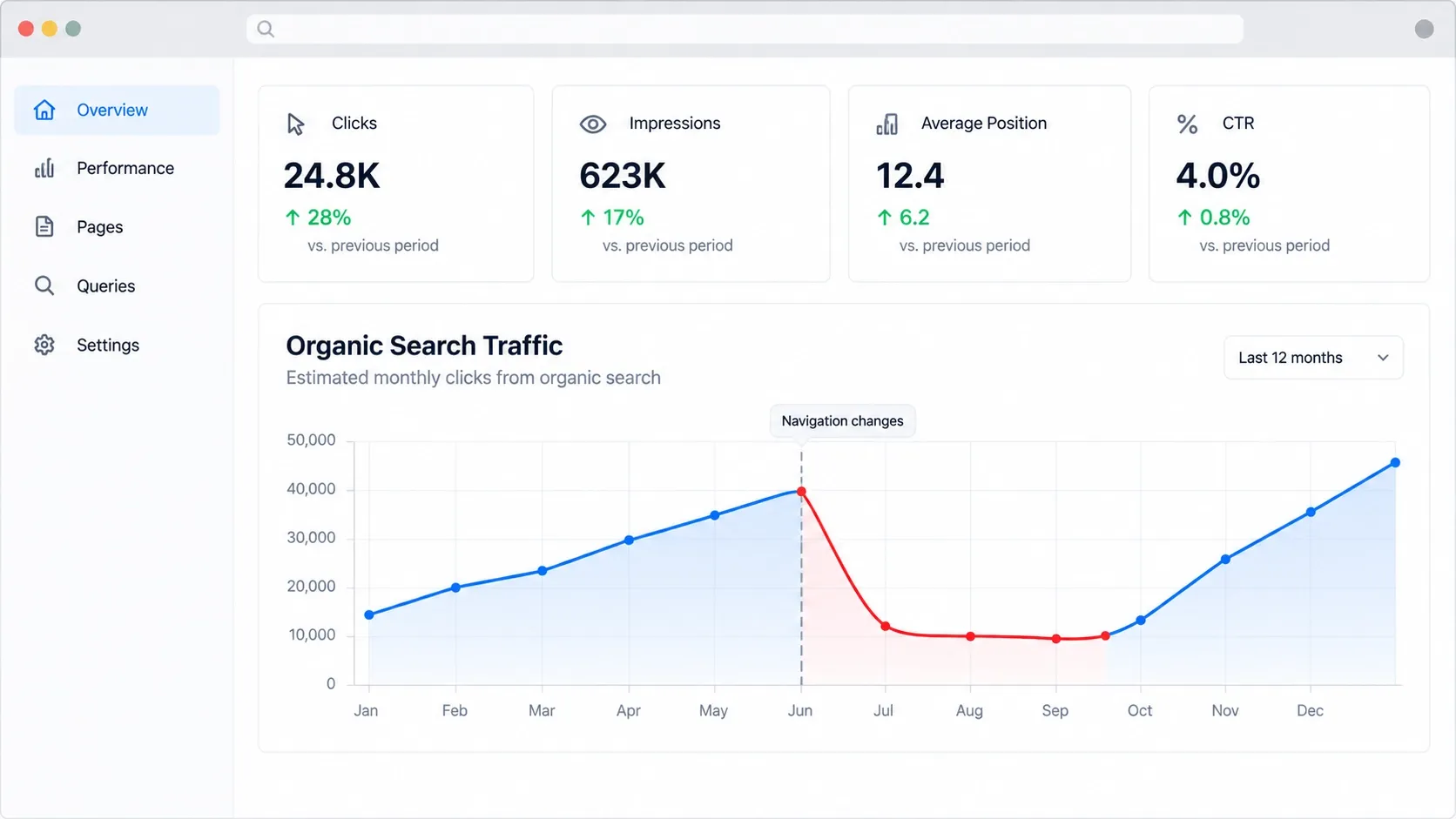
Tracking performance helps you determine whether your SEO work is moving in the right direction. Google Search Console can provide useful information about search queries, impressions, clicks, and average positions.
Look beyond rankings alone. Important measurements include:
- Organic clicks and impressions
- Search queries
- Average keyword positions
- Organic traffic
- Performance of important pages
- Leads or conversions from organic search
Review these metrics over time rather than reacting to every daily ranking fluctuation. If several pages target closely related keywords, check whether they are competing for the same search intent.
Resolving keyword cannibalization issues can help give important pages a clearer purpose and stronger topical focus.
Conclusion
Improving SEO rankings requires a balanced approach. Helpful content, on-page SEO, technical performance, quality links, mobile usability, and local optimization all contribute to a stronger search presence.
Start with the pages and search terms that matter most to your business. Improve them systematically, monitor performance, and continue refining your strategy as your website and audience needs change.
Share this article