
React Native continues to shape modern mobile app development. Whether you want to build your first application or begin a long term career in software engineering, React Native offers a powerful and accessible starting point. It allows you to create mobile applications with familiar JavaScript skills. This combination makes it one of the most attractive frameworks in the world. Mobile app revenue is expected to reach more than six hundred billion dollars in 2025, which creates a growing demand for developers who understand tools like React Native.
What is React Native?
A software framework is a structured platform that provides the foundation for building applications. React Native is an open source framework that allows developers to create mobile applications using JavaScript and React principles. It includes pre built components, libraries, documentation, and tools that simplify the development process.
What does “native” mean in React Native?
A native application is built specifically for one operating system. For example, an application designed for iOS uses Swift or Objective C, while an Android application uses Java or Kotlin. Native applications feel faster and more responsive because they run directly on the device’s operating system.
React Native bridges this gap. It allows developers to write JavaScript code that communicates with native components. The application behaves like a native application even though the developer did not use traditional native languages. This gives users a smoother and more polished experience. It also gives developers the advantage of building apps that feel natural on both iOS and Android with one shared codebase.
React Native vs React
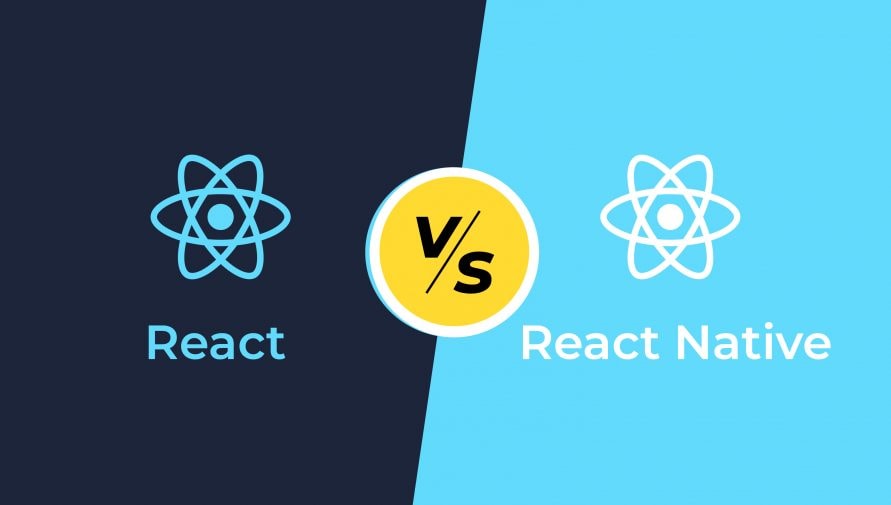
React and React Native share similar foundations, but they serve different purposes. React, also known as React JS, is a JavaScript library used primarily for front end web development. It manages dynamic user interfaces on websites and updates the screen using a virtual representation of the page called the virtual DOM.
React Native, on the other hand, focuses on mobile development. It uses native components instead of web based elements. While the syntax feels familiar to anyone who has used React JS, the output is completely different.
Key Differences Between React And React Native
Feature | React | React Native |
|---|---|---|
Platform | Web development | Mobile development |
Core Technology | JavaScript library | JavaScript based framework |
Rendering Output | Virtual DOM in web browsers | Native components on device |
Typical Use Case | Websites and web apps | iOS and Android applications |
Both tools complement each other. Many companies use React for their websites and React Native for their mobile apps. This allows teams to share knowledge, logic, and development patterns across platforms.
What is Expo React Native?
Expo is another popular tool used with React Native. It is a framework that provides additional libraries, testing tools, and services that help developers build applications faster. Expo simplifies tasks such as access to device cameras, push notifications, fonts, and images.
For many beginners, Expo removes complicated configuration steps that come with traditional mobile development. It also offers the Expo Go application, which allows developers to preview their work instantly on a real device. This faster feedback loop creates a smoother learning experience and allows teams to prototype quickly.
What Is React Native Used For
React Native is widely known for its cross platform development capabilities. Developers can write their code once and use it across multiple devices and operating systems. Instead of building two separate applications, one for iOS and another for Android, React Native allows shared code while still giving room for platform specific features.
Why Developers Choose React Native
Active Community And Ecosystem
React Native has a large global community. Developers can ask questions on the Reactiflux Discord server, join local meetups, or explore thousands of open source packages that extend functionality.
Strong App Performance
React Native applications behave like native applications, which offers improved performance compared to purely web based solutions. This makes it suitable for high quality mobile experiences.
Code Reusability And Cost Savings
Developers can reuse large parts of their codebase. This lowers development costs and shortens timelines. Teams can build faster without sacrificing quality.
Examples of applications built with React Native
Many well known companies use React Native to power their mobile experiences. This demonstrates the framework’s reliability and flexibility.
Some popular applications include:
These companies handle millions of users, which shows that React Native can support both small projects and large scale applications.
Working with React Native
React Native is open source, which means anyone can learn and use it without licensing fees. Many developers begin as hobbyists and later move into full time careers. Others join engineering teams that specialize in building mobile applications.
A typical day for a React Native developer includes writing code, solving bugs, improving performance, and designing user interfaces. Although React Native developers focus mainly on front end features, they often collaborate with designers, back end developers, and quality assurance teams. This teamwork ensures the application feels consistent across all screens and devices.
Conclusion
React Native remains one of the most powerful tools for cross platform mobile development in 2025. It offers a familiar JavaScript environment, smooth performance, reusable components, and strong community support. Whether you want to build your first application or create professional level mobile experiences, React Native gives you the flexibility and scalability you need.
Read More About: What is Webflow?
Share this article