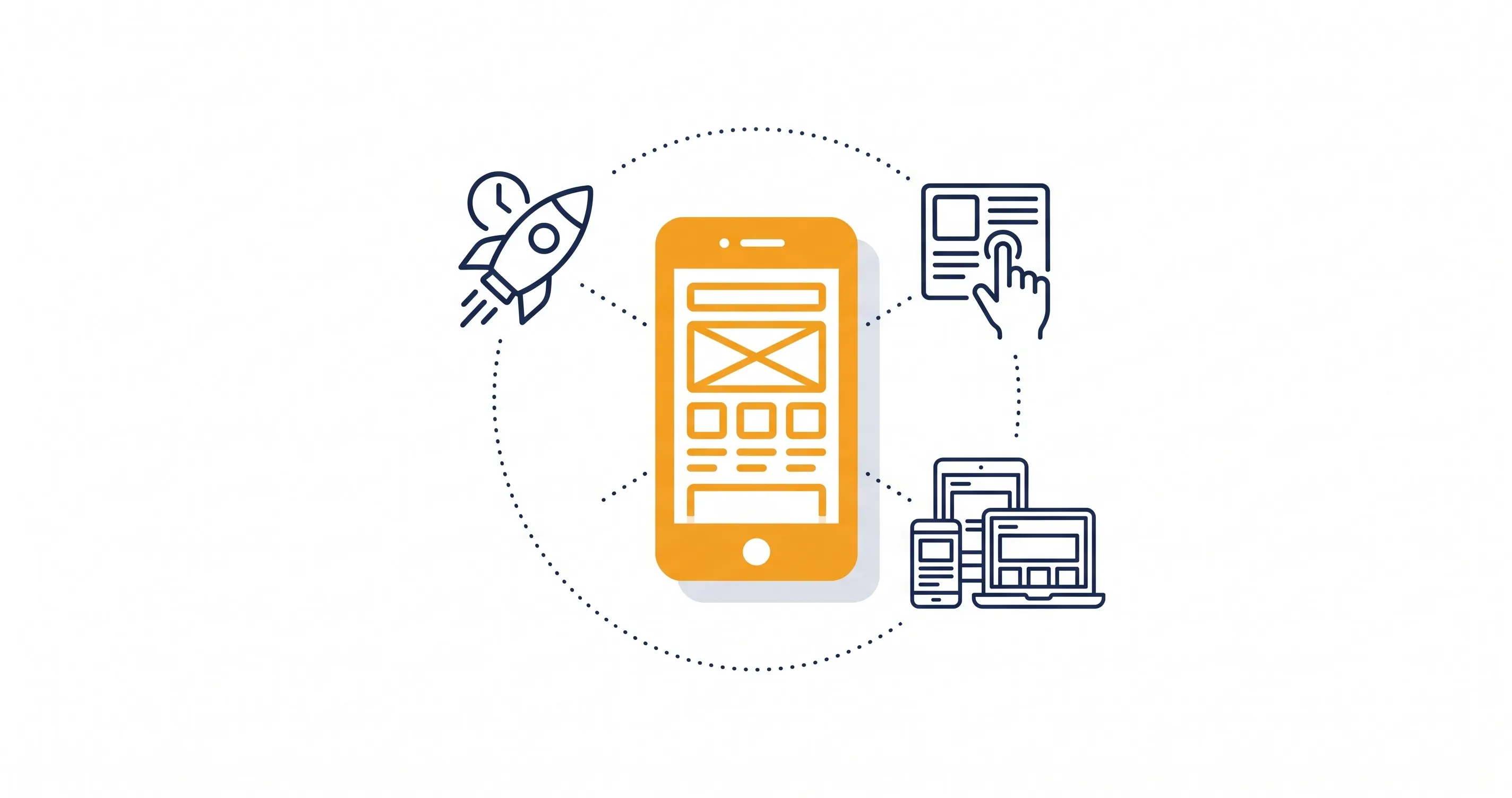
Most users now visit websites from their phones. If your site is slow, hard to use, or poorly structured on mobile, users leave immediately. In 2026, mobile-first web design is no longer optional, it’s the standard. Google ranks websites based on their mobile experience, and users expect fast, simple, and easy navigation. If your website is not built for mobile first, you are already losing traffic, rankings, and conversions.
What Is Mobile-First Web Design?
Mobile-first web design means designing your website for mobile devices first, then scaling it for larger screens like tablets and desktops.
Instead of starting with a desktop layout and shrinking it down, you begin with a clean, fast mobile version. After that, you gradually add more features for bigger screens.
This approach ensures your website is:
- Fast
- Easy to use
- Optimized for SEO
Why Mobile-First Design Is the 2026 Standard
Mobile-first design is now the standard because of how users browse and how Google ranks websites.
Most users access websites through mobile devices. If your website does not perform well on mobile, you lose engagement and potential customers.
Google also uses mobile-first indexing, which means it ranks your website based on the mobile version. A poor mobile experience directly affects your rankings.
User behavior has also changed. People expect fast-loading pages, simple layouts, and easy navigation. If your website is slow or confusing on mobile, users leave quickly and move to competitors.
Mobile-First vs Responsive Design
Many people think mobile-first and responsive design are the same, but they follow different approaches.
Feature | Mobile-First Design | Responsive Design |
|---|---|---|
Approach | Starts with mobile layout | Starts with desktop layout |
Performance | Faster and optimized | Can include extra elements |
SEO impact | Strong (mobile-first indexing) | Depends on optimization |
User experience | Built for mobile users first | Adjusted for mobile later |
Strategy | Add features as screen grows | Remove features for smaller screens |
Mobile-first design focuses on performance and simplicity from the start, which makes it more effective for modern websites.
Key Principles of Mobile-First Web Design
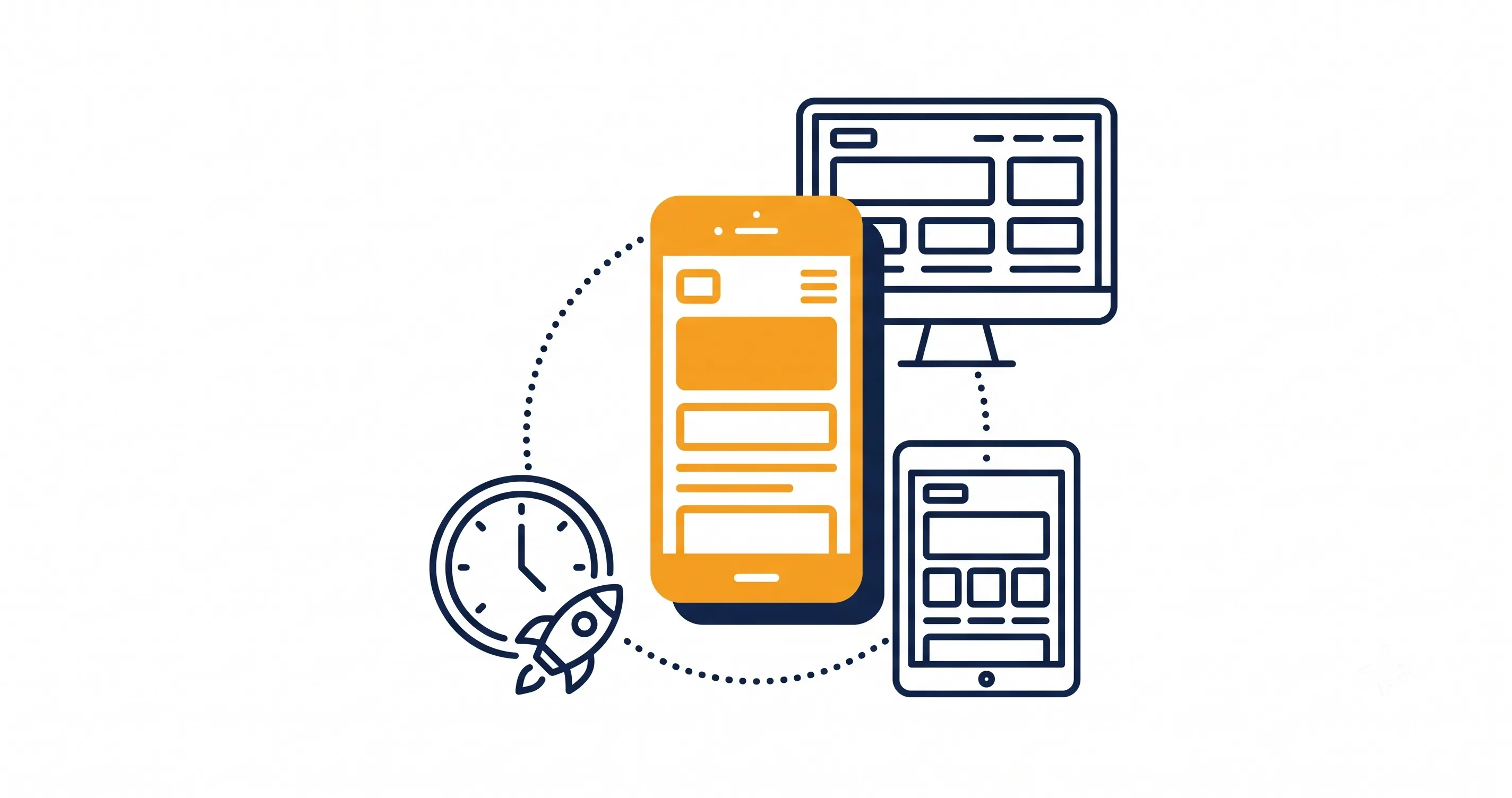
To make mobile-first design effective, you need to focus on usability, speed, and clarity.
Content-first approach
Mobile screens are limited, so you need to focus only on what matters. Prioritize important content and remove anything unnecessary. Users should quickly understand your message without scrolling through clutter.
Simplified navigation
Navigation should be clear and easy to use. Complex menus create confusion and increase bounce rates. Keep navigation simple so users can find what they need without effort.
Performance optimization
Speed is critical. Mobile users expect websites to load quickly. Optimize images, reduce heavy elements, and keep your code clean. Even small delays can cause users to leave your site.
Touch-friendly design
Mobile users interact with their fingers, not a mouse. Buttons should be easy to tap, links should have proper spacing, and interactive elements should work smoothly. A touch-friendly design improves usability and overall user experience.
Benefits of Mobile-First Web Design
Mobile-first design directly improves how your website performs for both users and search engines. When your site is built for mobile from the start, it becomes faster, cleaner, and easier to use.
A mobile-first website loads quickly, which keeps users engaged and reduces bounce rates. It also improves user experience because content is simple, readable, and easy to navigate on smaller screens.
From an SEO perspective, mobile-first design aligns with Google’s ranking system. Since Google uses mobile-first indexing, a well-optimized mobile experience increases your chances of ranking higher.
It also improves conversions. When users can easily browse, read, and interact with your website on mobile, they are more likely to take action, whether it is filling a form, making a purchase, or contacting your business.
How to Implement Mobile-First Design (Step-by-Step)
Implementing mobile-first design is about starting simple and building up. The focus should always be on performance, usability, and clarity.
Start with mobile wireframes
Begin by designing your layout for mobile screens first. Focus on essential content, clear structure, and simple user flow. This helps you prioritize what matters most without adding unnecessary elements.
Use responsive breakpoints
After designing for mobile, scale your layout for larger screens using responsive breakpoints. This allows your website to adapt smoothly across different devices without breaking the layout.
Optimize images and media
Large images slow down mobile websites. Use compressed images, modern formats, and proper sizing to ensure fast loading without reducing quality.
Improve page speed
Page speed is critical for mobile performance. Reduce heavy scripts, clean up code, and use fast-loading elements. A faster website improves both user experience and SEO.
Test across devices
Always test your website on different screen sizes and devices. This ensures your design works properly everywhere and provides a consistent experience for all users.
Mobile-First Design Best Practices
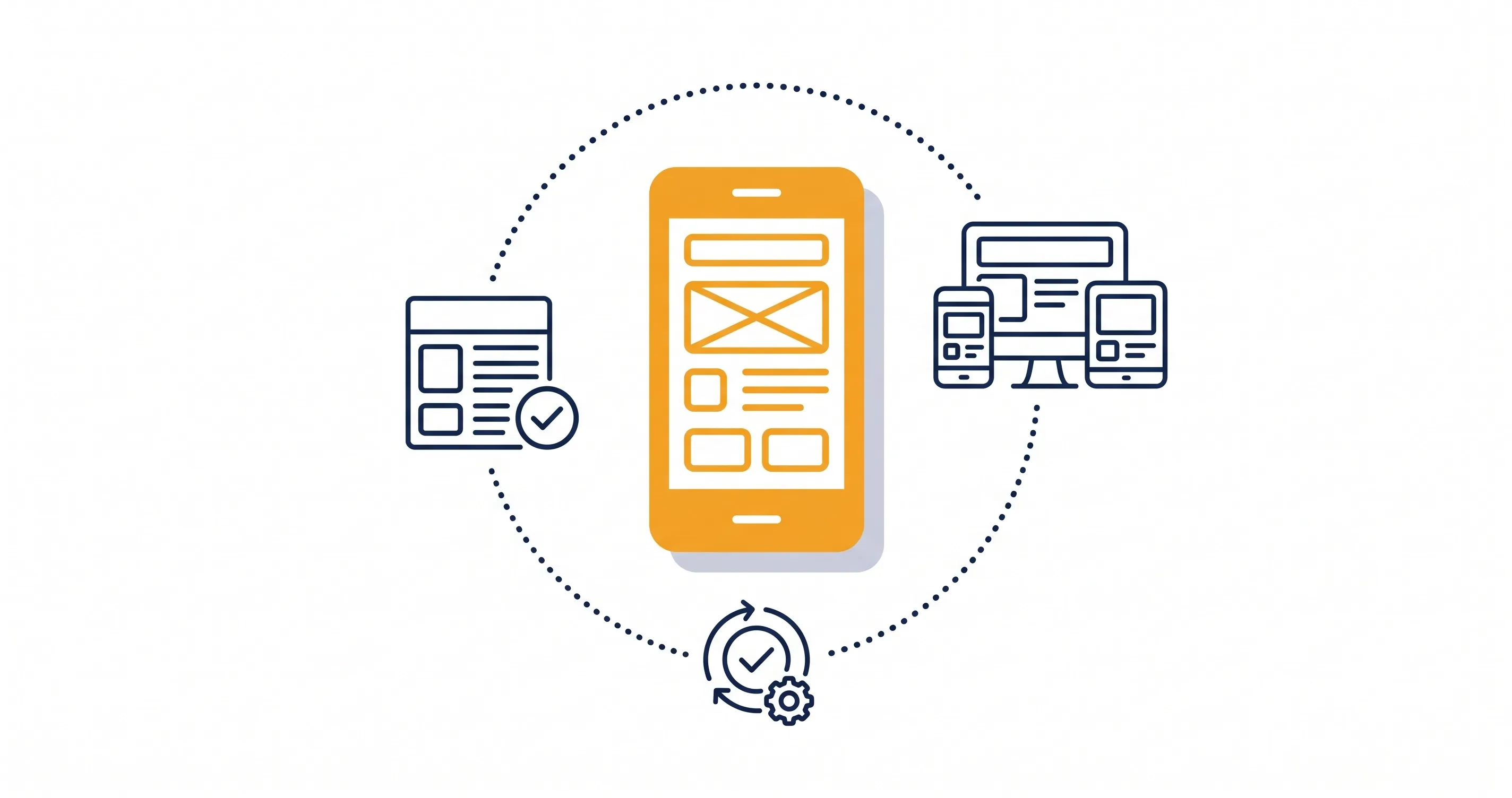
Keep your design simple and focused. Always prioritize important content and remove anything that does not add value. Use clear typography so text is easy to read on smaller screens. Make sure buttons and interactive elements are easy to tap and properly spaced.
Consistency is also important. Maintain the same design style, colors, and structure across all devices. This helps users navigate your website easily without confusion.
Common Mistakes to Avoid
One of the biggest mistakes is starting with a desktop design and trying to adjust it for mobile later. This often leads to slow and cluttered mobile layouts.
Another common issue is adding too many elements, which can make the website heavy and difficult to use. Ignoring page speed is also a major mistake, as slow websites lose users quickly.
Poor navigation and small touch elements can frustrate users and reduce engagement. Every part of your design should be built with mobile users in mind.
Future Trends in Mobile-First Design (2026)
Mobile-first design is evolving with new technologies and user expectations. In 2026, websites are becoming faster, smarter, and more user-focused.
AI-driven design is helping personalize user experiences based on behavior. Websites are adapting content dynamically to match user preferences.
Voice search is also growing, which means websites need to be optimized for conversational queries. Simpler layouts and faster access to information are becoming more important.
Progressive Web Apps (PWAs) are gaining popularity because they offer app-like experiences directly in the browser. These improve performance and user engagement.
Core Web Vitals continue to play a major role in rankings. Speed, responsiveness, and visual stability are now essential parts of mobile-first design.
How Mobile-First Design Impacts SEO
Mobile-first design has a direct impact on your SEO performance. Since Google ranks websites based on their mobile version, a well-optimized mobile experience improves visibility in search results.
Faster loading speeds help reduce bounce rates and increase time on site, which are important ranking signals. Clean structure and simple navigation make it easier for search engines to crawl and index your content.
Mobile-friendly websites also perform better in user engagement metrics, which further strengthens their rankings. In short, mobile-first design is not just about design, it is a core part of modern SEO strategy.
Conclusion
Mobile-first web design is now the foundation of successful websites in 2026. With most users browsing on mobile devices and Google prioritizing mobile experience, businesses must focus on speed, simplicity, and usability.
By designing for mobile first, you create a website that is faster, easier to use, and better optimized for search engines. This leads to higher rankings, improved user engagement, and better conversions.
Share this article